
Author: R&D Team, CUIGUAI Flavoring
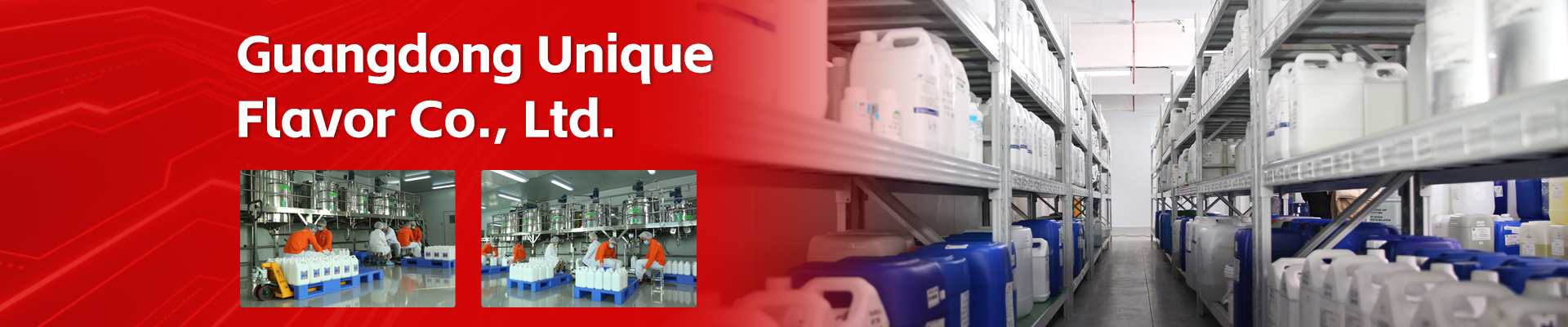
Published by: Guangdong Unique Flavor Co., Ltd.
Last Updated: Mar 19, 2026

Flavor R&D Lab
The beverage landscape is undergoing a profound paradigm shift. Consumers no longer view drinks merely as sources of hydration; they view them as sophisticated delivery systems for health, wellness, and performance optimization. This transition has fueled the explosive growth of the functional beverage market—a sector encompassing everything from energy drinks and protein shakes to nootropic elixirs and gut-health tonics.
However, for manufacturers, this boom presents a formidable technical challenge: many of the most potent functional ingredients—adaptogens, botanical extracts, vitamins, minerals, and bioactive proteins—possess inherent, often intense, off-notes. They can be bitter, astringent, grassy, metallic, or chalky.
This is where the science of “Smart Flavors” becomes critical. As a professional manufacturer of food and beverage flavorings, we understand that achieving commercial success requires a perfect symphony between scientific efficacy and sensory pleasure. A product will not succeed on health claims alone; it must taste exceptional. This article will explore the technical methodologies, chemical interactions, and innovative flavoring technologies required to infuse true wellness with winning taste.
The first step in developing a “smart flavor” is understanding the specific wellness intent driving the consumer. The functional beverage market is segmented by the benefit provided. Each segment carries a different set of functional ingredients, and consequently, a unique set of flavoring challenges.
[CITATION 1: A report by McKinsey & Company on the “Future of Wellness” confirms that consumers are increasingly looking for products that support cognitive function, stress management, and gut health, prioritizing efficacy and natural origins. [McKinsey & Company, “Still feeling good: The US wellness market aims to keep the momentum going,” 2022]]
To solve a flavoring problem, we must first analyze it at a molecular level. The off-notes encountered in functional beverages are rarely simple odors; they are complex chemical interactions involving trigeminal sensations (like astringency) and taste bud activation (like bitterness).
| Functional Ingredient Category | Typical Off-Note Profile | Chemical Basis |
| Alkaloids (e.g., Caffeine, Guarana) | Intense bitterness | Direct activation of T2R bitter taste receptors. |
| Botanical Extracts (e.g., Ashwagandha, Ginseng) | Earthy, musky, rooty, grassy, astringent | Presence of saponins, terpenes, and polyphenols (tannins). Saponins often cause lingering, soapy notes; polyphenols cause astringency by cross-linking salivary proteins. |
| Proteins (e.g., Pea, Rice Isolates) | Chalky, beany, grassy, cereal-like, bitter peptides | Residual hexanal and other aldehydes/ketones from lipid oxidation; presence of hydrophobic amino acid sequences (especially when hydrolyzed). |
| Minerals (e.g., Magnesium sulfate, Zinc gluconate) | Metallic, salty, soapy, bitter | Direct ionic interaction with taste receptors, sometimes involving the trigeminal nerve. |
| Vitamins (e.g., B-Complex) | Medicinal, “vitamin” smell, sulfuric | Presence of sulfur-containing compounds (like thiamine) and degradation products. |
Understanding these specific interactions allows flavorists to employ targeted countermeasures rather than using a blanket “covering” approach.
A “Smart Flavor” is not merely a strong lemon or berry profile applied to a formulation. It is a scientifically engineered flavor system designed to interact specifically with the functional matrix. This system utilizes a toolkit of flavoring technologies beyond simple aroma compounds.
The smartest flavors function on four distinct levels:
Taste masking is the art of neutralizing off-notes without using excessive sweetness or acidity. It relies on the science of flavor modulation. Smart flavor systems include compounds that function as “bitterness blockers” or “allosteric modulators.” These compounds are designed to bind weakly to bitter receptors (T2Rs) or alter how the receptor perceives the bitter molecule, effectively increasing the threshold at which bitterness is detected.
Instead of fight off-notes, smart flavors often lean into them. This technique uses flavor profiles that are perceived as “congruent” with the inherent notes of the functional ingredient.
Functional ingredients often alter mouthfeel—e.g., protein isolates make beverages viscous and “chalky,” while minerals can create a metallic thinness. Smart flavor systems include texturizers or mouthfeel enhancers (often subtle hydrocolloids or specialized aroma chemicals) that restore a perceived smoothness, richness, or creaminess, which consumers associate with quality.
In beverages with complex matrices (like emulsions), the timing of flavor release is critical. Smart flavors may employ encapsulation technologies. This protects the flavor from degradation (by acidity or heat) and ensures a controlled release—masking the bitter finish of a functional component while delivering a long-lasting, pleasant top-note.

Taste Masking Tech
To illustrate the practical application, let’s explore how smart flavors are deployed in three major functional categories.
[CITATION 2: Research published in Journal of Agricultural and Food Chemistry highlights how flavor compounds bind differently to various food proteins (pea vs. whey), altering their stability and perceived intensity, emphasizing the need for protein-specific flavor solutions. [Wang, R., et al., “Interactions between aroma compounds and food proteins,” Journal of Agricultural and Food Chemistry, 2017]]
The challenge of flavoring functional beverages is multiplied by concurrent consumer demands for Sugar Reduction (use of high-intensity sweeteners like Stevia/Monk Fruit) and Clean Label (natural flavors, non-GMO).
Removing sugar removes both sweetness and bulk (mouthfeel). Furthermore, natural high-intensity sweeteners often introduce their own off-notes (like the licorice-like lingering finish of Stevia).
[CITATION 3: The American Botanical Council (ABC) notes the increasing use of herbal extracts in functional foods, stressing the technological requirement to maintain stable flavor profiles despite inherent volatility or degradation of bioactive compounds over a product’s shelf life. [American Botanical Council, HerbalGram, “Market Report,” specific issue relevant to beverage, e.g., 2021]]
Developing potent, effective masking systems using only natural flavor materials is a significant limitation. It requires deeper understanding of raw material chemistry to find compounds that offer modulation effects within a “natural” designation. This is where advanced extraction, molecular distillation, and enzyme-mediated flavor generation become essential tools for the professional manufacturer.

Stability Testing
A final critical challenge is ensuring that the smart flavor system and the functional active ingredients remain stable and harmonious over the product’s entire shelf life.
Functional ingredients are chemically active. Minerals can oxidize; botanical polyphenols can degrade and precipitate; probiotics can alter pH. Furthermore, flavor compounds are volatile and can react with the matrix or be “scalped” (absorbed) by the packaging (especially plastic).
Successful functional beverage development requires this proactive analytical approach to ensure that the user intent of “Wellness” remains pleasurable from production to consumption.
The functional beverage market holds immense potential for brands that can master the complex intersection of efficacy and sensory experience. The consumer’s intent for “Infusing Wellness” must be delivered without sacrificing the fundamental user intent of “Enjoyable Hydration.”
Achieving this perfect balance requires moving beyond generic flavoring approaches. It demands the application of “Smart Flavors”—integrated flavor systems that utilize targeted taste receptor modulation, sensory congruency, mouthfeel optimization, and robust stability protocols.
As a professional manufacturer specializing in functional flavoring solutions, we understand this science. We invite you to utilize our technical expertise to transform your highly functional formulations into highly craveable products.

Wellness Lifestyle
Let’s solve your toughest flavoring challenges. Contact our R&D team for a technical exchange or to discuss your specific functional ingredient matrix.
Click Here to Request Free Smart Flavor Samples and a Technical Consultation
| Contact Channel | Details |
| 🌐 Website: | www.cuiguai.cn |
| 📧 Email: | info@cuiguai.com |
| ☎ Phone: | +86 0769 8838 0789 |
| 📱 WhatsApp: | +86 189 2926 7983 |
| 📍 Factory Address | Room 701, Building 3, No. 16, Binzhong South Road, Daojiao Town, Dongguan City, Guangdong Province, China |
Your expertise is efficacy. Our expertise is taste. Together, we can create wellness that people crave.
Copyright © 2025 Guangdong Unique Flavor Co., Ltd. All Rights Reserved.


