
Author: R&D Team, CUIGUAI Flavoring
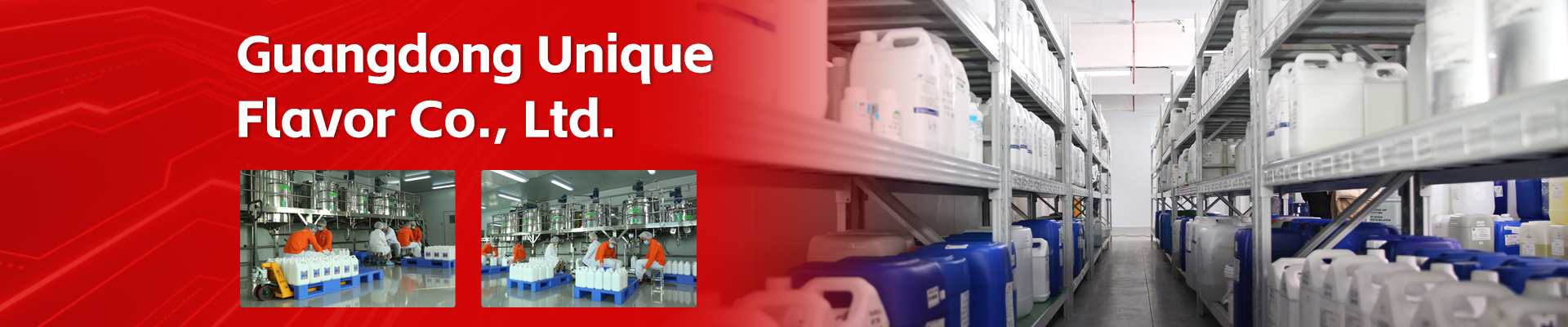
Published by: Guangdong Unique Flavor Co., Ltd.
Last Updated: Mar 14, 2026

Art Meets Science
In an increasingly interconnected world, the consumer palate is becoming more adventurous, sophisticated, and demanding. The modern consumer no longer views “ethnic” or “regional” cuisine as a novelty; they demand these experiences daily, expecting absolute authenticity in everything from a ready-to-drink (RTD) beverage to a packaged savory snack.
According to a 2023 report by Innova Market Insights, “connecting with culture” is a top consumer driver, with high demand for food and beverages that offer an authentic taste of world traditions.
For food and beverage manufacturers, this presents a monumental opportunity, but an equally significant technical challenge. How does one capture the “soul” of a hyper-local dish—perhaps only found in a specific village in Provence or a night market in Osaka—and stabilize, standardize, and scale it for a multi-ton global product launch without losing its essential character?
This is where the specialized expertise of a flavor manufacturer becomes critical. Scaling authenticity is not a matter of simple multiplication; it is a complex intersection of analytical chemistry, sensory science, regulatory navigation, and culinary artistry. In this technical whitepaper, we will explore the precise methodologies used to translate local delicacies into global successes.
The journey of a thousand miles begins with a single taste. Authentic flavors are complex matrices. A single herb, like cilantro, contains dozens of volatile compounds. A complex dish, like a slow-cooked Oaxacan Mole, contains hundreds, resulting from interaction, reduction, and caramelization.
To scale these, we must first understand them at a molecular level.
Our R&D process begins not in the kitchen, but in the laboratory. To recreate a local delicacy, we must identify its “flavor fingerprint.”
The primary tool for this is Gas Chromatography-Mass Spectrometry (GC-MS). GC-MS allows us to separate, identify, and quantify the volatile compounds responsible for the aroma and perceived flavor of a food sample. However, simple identification is insufficient. Many compounds are present but do not contribute significantly to the sensory experience.
To distinguish between active and passive compounds, we utilize GC-Olfactometry (GC-O). This technique involves a human sniffer (a trained sensory panelist) detecting compounds as they elute from the GC, assessing their odor active value (OAV) and character.
Consider the complexity of replicating a true “Smoked Hickory” flavor from a specific region. A GC-MS analysis would reveal hundreds of compounds, but the GC-O process highlights the specific phenols (like guaiacol and syringol) responsible for the characteristic smoky, woody notes. Our challenge is to synthesize these in the correct proportions, accounting for the matrix effect of the final product.
Authenticity is often deeply tied to terroir—the environmental factors, including soil and climate, that affect the chemical composition of raw ingredients.
For example, a lime flavoring derived from key limes grown in Florida has a vastly different chemical profile (higher in citral and limonene) than a Persian lime profile needed for a Middle Eastern-inspired beverage.
Citation 1: For a detailed understanding of the chemical factors contributing to specific food flavor profiles, resources like the Journal of Agricultural and Food Chemistry, published by the American Chemical Society, provide peer-reviewed research on the impact of origin and processing on flavor precursors.
When scaling, sourcing the exact raw material from the region of origin is often economically or logistically unfeasible. Our technical role is to analyze the signature compound ratios that define that regional ingredient and reconstruct them using sustainable, standardized, and scalable raw materials (natural or nature-identical) without compromising the perceived authenticity.
Once we have mapped the flavor fingerprint, the next stage is synthesis. This is where chemical engineering and culinary science converge to build the flavor from the ground up.
Many local delicacies derive their depth of flavor from cooking processes: roasting, braising, fermenting, or grilling. To scale these, we cannot rely solely on mixing top notes. We must utilize reaction flavors (also known as process flavors).
Reaction flavors are created by heating specific combinations of amino acids and reducing sugars under controlled conditions. This process replicates the Maillard reaction, the fundamental chemical reaction responsible for the browning and savory depth of cooked foods (e.g., the flavor of roasted meat, coffee, or baked bread).
By controlling the parameters—the specific amino acid/sugar precursors (e.g., cysteine for meaty notes, proline for bakery notes), pH, temperature (usually 100°C–180°C), pressure, and reaction time—we can precisely target and scale the complex, savory basenotes of a regional dish.
To scale a Tandoori Chicken profile, we might focus on a reaction involving specific spices heated in a fat matrix to develop the char-grilled and smoky basenotes, which are then layered with the top notes of yogurt, garlic, and ginger.
To scale a Japanese Miso profile, we analyze the products of enzymatic fermentation, replicating the savory umami (monosodium glutamate) and kokumi (glutathione) enhancing peptide compounds developed during traditional aging.
Authentic flavor profiles are rarely just about aroma. They often involve complex interplay between fundamental tastes and trigeminal (mouthfeel and nerve) sensations.

Industrial Scaling
The most common point of failure in food and beverage innovation occurs during scale-up. A flavor that tastes perfect in a 1 kg laboratory benchtop sample may perform completely differently in a 1,000 kg industrial production batch.
This discrepancy is rarely due to the flavor itself; it is due to matrix interactions—how the flavor interacts with the other ingredients, processing methods, and packaging of the final product.
Many global products require significant thermal processing for safety and shelf-life, such as UHT (Ultra-High Temperature) pasteurization for beverages or retorting (canning) for ready-meals.
High heat can cause volatile flavor compounds to degrade (flash off), oxidize, or react with other components in the food matrix (e.g., proteins or carbohydrates). This is why a flavor profile modeled after a fresh dish often becomes “flat” or develops off-notes after processing.
To address this, our flavorists formulate specifically for thermal stability:
Encapsulation is perhaps the most critical technology for scaling authentic flavors. It involves trapping active flavor compounds (the core) within a matrix material (the shell) to protect them from environmental degradation (heat, oxidation, moisture) and control their release.
Different encapsulation technologies provide different benefits:
The “authenticity” of many local dishes relies heavily on fat. Fat is a flavor carrier; it dissolves and delivers many lipophilic aroma compounds while providing essential mouthfeel.
When a manufacturer tries to create a low-fat or plant-based version of an authentic dish, they run into massive flavor challenges. Reducing fat (a primary flavor solvent) can cause lipophilic flavors to “flash off” faster, leading to a loss of the rich, long-lasting flavor profile that consumers expect from the authentic version.
Conversely, plant-based proteins (pea, soy, etc.) are notorious for flavor binding (absorbing flavor compounds) and introducing unpleasant vegetal or beany off-notes.
We solve these issues using targeted masking technologies to neutralize protein off-notes and mouthfeel enhancers (like specific emulsifier blends or hydrocolloids) to replicate the rich perception of fat, allowing the authentic flavor profile to shine through in healthier or plant-based alternative products.

Global Logistics
Scaling a flavor to a global market is not just a chemical challenge; it is a regulatory marathon.
A flavor profile designed for a local delicacy in South America might use raw materials that are not approved (FEMA GRAS) in the United States, or that exceed maximum residue levels (MRLs) in the European Union. Furthermore, different regions have vast disparities in labeling laws for “natural” flavorings.
A critical component of our manufacturing process is regulatory support. Before we finalize a global formula, our regulatory team must ensure that every compound used is approved in every target market:
Citation 2: For global trade information and understanding the harmonize system (HS) codes often used in the international trade of flavor mixtures, the World Trade Organization (WTO) and national customs websites like U.S. Customs and Border Protection provide resources on import/export regulations and tariffs.
Our global regulatory matrix allows us to develop “umbrella formulas” that are pre-approved for use across the US, EU, and key Asian markets, simplifying logistics and production for our clients.
The global trend toward “Clean Label”—products with shorter, recognizable ingredient lists—is perhaps the single biggest hurdle to scaling authentic flavors.
Consumers demand authenticity, but they also want “No Artificial Flavors,” “Natural,” “Non-GMO,” and “No Preservatives.”
Recreating complex cooked profiles using only natural precursors is significantly more expensive and chemically challenging than using nature-identical or artificial compounds. Natural raw materials are often more volatile, less standardized, and less stable.
We meet this challenge through advanced Natural Extraction and Natural Reaction techniques. We use Supercritical CO2 Extraction to obtain highly concentrated, true-to-nature extracts from herbs and spices without utilizing harsh chemical solvents. Our clean label reaction flavors utilize only non-GMO, allergen-free amino acids and reducing sugars derived from natural sources, allowing for “Natural Flavoring” or “Natural (Specific Source) Flavor” declarations globally.
In the global market, certifications are often the baseline for entry. Scaling authenticity often means adhering to religious dietary laws or allergen restrictions.
Our manufacturing facilities operate with strict separation of production lines to manage:
As the demand for authenticity grows, the industry must move faster and more efficiently. We are investing in technologies that reduce the iterative process between kitchen and market.
The future of flavor scaling lies in digitalization. We are utilizing vast datasets of GC-MS flavor fingerprints, consumer sensory data, and stability results to build predictive models.
When a client wants to scale a specific dish, we can use Artificial Intelligence (AI) to analyze the profile and predict:
This data-driven approach dramatically reduces R&D timelines and increases the probability of first-time-right scale-ups.
Citation 3: To explore the intersection of technology and food production, resources from IFT (Institute of Food Technologists) and their publication Food Technology Magazine offer insights into how AI and data science are being applied to flavor development and sensory analysis.
Finally, the future of global taste must be sustainable. Sourcing rare or exotic ingredients on a global scale is not environmentally responsible.
Our focus is on recreating these authentic profiles using sustainable, localized feedstocks. This might involve utilizing Precision Fermentation to produce rare flavor compounds from renewable sugar sources, or upcycling agricultural by-products (like coffee cherry or citrus peel) into valuable natural flavor precursors.
Authenticity must not come at the cost of the environment.
Scaling an authentic flavor is not merely a manufacturing process; it is a translation of cultural heritage through the language of science. It requires a deep respect for the culinary art of the local delicacy and an equally deep command of the analytical chemistry, process engineering, and regulatory frameworks needed to make that flavor stable, safe, and viable on a global stage.
At our core, we do not just manufacture flavors; we build technical bridges. We take the passion and complexity of local tastes and provide the scientific infrastructure to share them with the world, ensuring that when a consumer tastes that Szechuan chili in New York, that Mole in London, or that Provence-style drink in Tokyo, they experience nothing less than the truth of the original dish.

Retail Readiness
Developing authentic, scalable flavors for a global market requires precision R&D and a deep understanding of complex food matrices. Do not leave your next product launch to chance.
Request Technical Consultation: Connect with our senior flavor chemists to discuss your specific authenticity challenges and matrix stability requirements. Let’s engineering your next global success.
Order a Free Sample Kit: Request a curated selection of our most stable, global-market-ready authentic flavors, including reaction savory profiles, clean-label natural extracts, and advanced encapsulated top notes.
| Contact Channel | Details |
| 🌐 Website: | www.cuiguai.cn |
| 📧 Email: | info@cuiguai.com |
| ☎ Phone: | +86 0769 8838 0789 |
| 📱 WhatsApp: | +86 189 2926 7983 |
| 📍 Factory Address | Room 701, Building 3, No. 16, Binzhong South Road, Daojiao Town, Dongguan City, Guangdong Province, China |
Copyright © 2025 Guangdong Unique Flavor Co., Ltd. All Rights Reserved.


