
Author: R&D Team, CUIGUAI Flavoring
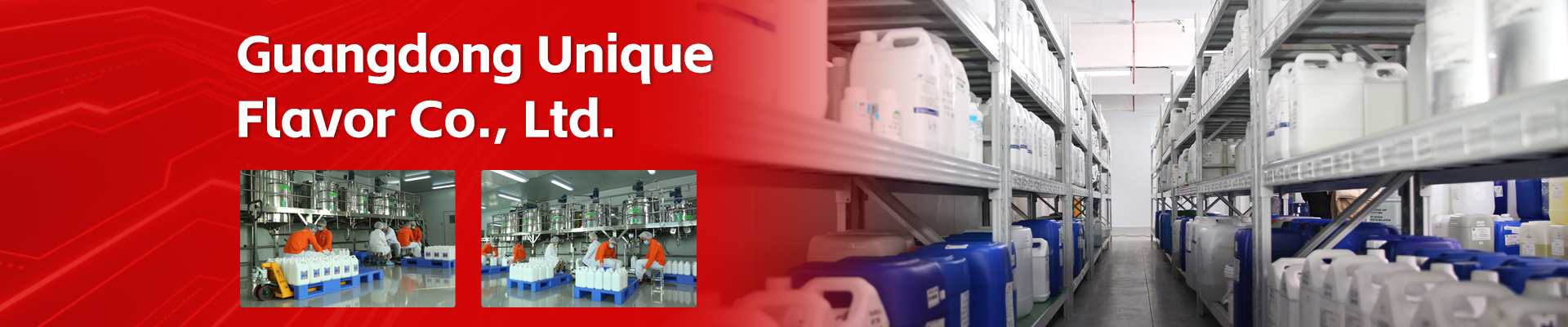
Published by: Guangdong Unique Flavor Co., Ltd.
Last Updated: Mar 30, 2026

Flavor Lab
The food and beverage industry stands at a paradigm shift. For decades, the gold standard of flavoring was high-fidelity replication—creating a synthetic strawberry that tasted “more like strawberry” than the fruit itself, or a beef profile that was indistinguishable from roasted meat. This approach served the industry well during the rise of processed convenience foods.
Today, however, the target is moving. Consumers are no longer satisfied with mere imitation. They are seeking experiences. They demand transparency (clean label), sustainability, and, most crucially, novelty. They want the next “umami”—a taste sensation that they cannot quite define, but cannot get enough of.
For professional product developers and R&D managers, this shift means that focusing solely on “identical-to-nature” synthesis is a strategy of diminishing returns. To capture market share and define the next generation of best-selling products, we must move beyond imitation and embrace the architecture of truly novel taste experiences.
At [CUIGUAI Flavor], a professional manufacturer of food and beverage flavorings, we understand that novel flavor creation requires a fusion of advanced sensory science, high-purity chemical engineering, and a culinary artist’s intuition.
This technically-rich post will dissect the methods, technologies, and scientific principles required to create flavors that have no direct precursor in the natural world.
Before we can look beyond imitation, we must understand the mechanics of imitation. The traditional flavoring model relies heavily on analytical chemistry to identify the key volatile compounds responsible for a target aroma.
A single natural source, such as a coffee bean, can contain over 800 volatile compounds. However, only a handful of these are “character-impact” compounds—the molecules that dominate our perception. For example, isoamyl acetate suggests banana; benzaldehyde suggests almond.
The traditional flavorist’s skill was a form of chemical impressionism: combining these high-impact synthetics with a complex blend of natural oils, extracts, and background chemical notes to achieve a convincing replica.
While this approach remains essential for stabilizing product quality and managing costs, it is inherently limited. It can only reproduce what already exists. It cannot create. To create truly novel experiences, we must abandon the premise of the “target natural reference.”
Creating novel flavors requires a different set of building blocks than those used for replication. We are no longer limited to extracting molecules found in fruit or meat; we are now leveraging biotransformation, upcycling, and high-purity molecular architecture.
The most exciting frontier in novel flavoring is not chemical synthesis, but biochemistry. Microorganisms are the world’s most sophisticated flavor factories. By utilizing specific strains of bacteria, yeast, or fungi in controlled fermentation environments, we can transform simple, sustainable substrates into complex, unique flavor precursors.
Traditional fermentation (e.g., cheese, beer) produces well-known flavors. Modern precision fermentation goes further.
Technical Deep Dive: Consider the use of non-conventional yeasts like Kluyveromyces marxianus. Unlike Saccharomyces cerevisiae, K. marxianus can produce significant quantities of unique esters and higher alcohols that are not typically found in conventional fruit or dairy profiles. By feeding this yeast specific amino acid precursors within a optimized nutrient broth, flavor scientists can engineer a profile that is “fruity,” but with an unfamiliar, exotic, or “unidentified” character.
This process transforms flavoring from a subtractive science (extraction) to an additive science (engineered creation). It also aligns perfectly with clean label demands, as these flavors are typically labeled as “Natural Flavoring.”
Sustainability is no longer optional; it is a driver of innovation. At [CUIGUAI Flavor], we have pioneered the use of agricultural and food manufacturing side streams as sources for novel flavor compounds.
Instead of trying to replicate, we analyze these side streams for their intrinsic flavor potential.
TechnTechnical Example: Citrus pulp left over from juice manufacturing is rich in flavonoids and terpenes. Instead of conventional steam distillation, which can destroy delicate notes, we might employ supercritical CO2 extraction at precisely calibrated temperatures and pressures. This gentle process captures non-polar flavor molecules that are lost in traditional processing. The resulting profile isn’t “orange juice flavoring”; it is a complex, resinous, almost botanical profile that offers a new definition of “fresh” for functional beverages.
When synthesis is required, it must be performed with incredible precision. Novel flavoring isn’t about using more ingredients; it is about using the right ingredients at their ultimate purity. The presence of even 0.01% impurities in a chemical precursor can skew the final profile, turning a “bright, acidic novelty” into something “medicinal.”
We utilize high-vacuum fractional distillation and membrane separation technologies to achieve chiral-specific molecules.
Technical Insight: Some flavor compounds are chiral, meaning they exist as “left-handed” (L) and “right-handed” (R) mirror images (enantiomers). Often, only one enantiomer carries the desired flavor profile, while the other is flavorless or unpleasant. By manufacturing chiral-pure synthetic molecules, we can deliver a cleaner, more intense, and predictable novelty effect that natural extracts cannot match.

Sensory Evaluation
Once we have our advanced building blocks, the real challenge begins. A novel taste experience is not just about a new chemical formula; it is about managing the complete organoleptic perception over time. We move from “flavorist as chemist” to “flavorist as sensory architect.”
This architecture focuses on four critical dimensions:
The human mouth experiences flavor through more than just taste buds (the five basic tastes). The trigeminal nerve detects tactile sensations, temperature, and chemical pain/pleasure. This includes cooling (menthol), warming (cinnamon/ginger), and tingling (Sichuan pepper).
Truly novel flavor experiences frequently leverage these sensations to add depth and excitement to the flavor profile.
TechnTechnical Example: If we are designing a novel flavor for a functional energy drink, we cannot use traditional fruit notes, as these can conflict with the bitterness of the active ingredients (e.g., caffeine, B-vitamins). Instead, we can create a profile based on Kokumi (see below) combined with a precisely managed trigeminal tingling effect. This sensation, which has no specific taste but provides a tactile stimulus, is novel, memorable, and masks bitterness without relying on sugar or acid.
“Kokumi” is a Japanese term often translated as “heartiness” or “mouthfulness.” While not a basic taste itself, it is a sensation that enhances, intensifies, and harmonizes other tastes, particularly savory, salty, and creamy profiles.
From a technical perspective, Kokumi compounds are frequently small peptides, such as glutamyl peptides, which interact with the calcium-sensing receptors (CaSR) on the tongue.
Authoritative Citation 1: Kokumi substances, though having no flavor of their own, enhance basic tastes, especially umami, salty, and sweet, and provide a lasting, savory richness, according to studies published in major nutritional journals. For instance, research regarding the role of sensory science and flavor chemistry in modern nutrition highlights how advanced sensory techniques like sensometrics are critical for understanding these complex perceptions (Teagasc, Agriculture and Food Development Authority, 2026).
We manufacture specific Kokumi peptide blends that allow developers to create depth and satiety in products like plant-based dairy or low-sodium soups, achieving a “novel” level of satisfaction without excessive fat or salt.
A great flavor experience is not a single, static note; it is a narrative with a beginning, middle, and end. We focus intensely on the temporal release curve.
Front notes (the “first bite” sensation) must be managed alongside middle notes (the body) and the crucial lingering finish.
TechnTechnical Example: In a novelty chewing gum or a long-lasting candy, we can use encapsulation technologies (such as spray drying or fluid-bed coating with a tailored polysaccharide matrix) to create multiple, sequential release points. We might engineer a profile that starts with a bright, volatile novelty note (e.g., engineered “botanical bloom”), transitions to a complex, Kokumi-enhanced mouthfeel (the body), and finishes with a subtle, prolonged warming effect (trigeminal).
Traditional flavor creation is a labor-intensive, iterative process. To accelerate innovation and find novel combinations, we are leveraging Flavouromics—the combination of advanced analytical chemistry with chemometrics.
By using high-throughput analytical data (GC-MS, LC-MS) of thousands of compounds and correlating this with vast databases of human sensory data, AI algorithms can predict non-obvious, complementary pairings that a human flavorist might never intuit.
Technical Insight: AI can analyze the complex interaction of aldehydes, ketones, and esters to predict which combinations, though not found together in nature, will produce a stable, desirable, and entirely novel profile. This speeds up R&D from months to weeks.

High-Speed Encapsulation
Creating a novel flavor in a lab is only 10% of the challenge. The true skill is ensuring that this profile is stable, scalable, and manufacturable under real-world processing conditions.
Novel flavors often rely on fragile volatile compounds that are sensitive to heat, oxidation, or pH changes. Without protection, these novel experiences will degrade before the product reaches the consumer.
At [CUIGUAI Flavor], we operate state-of-the-art encapsulation facilities. We do not just make flavor liquids; we engineer flavor delivery systems.
Technical Deep Dive: For products that undergo high-heat processing (e.g., retort, UHT, baking), standard encapsulation is insufficient. We use cross-linking matrix technologies where the protective wall (often a blend of proteins and polysaccharides) is chemically cross-linked after encapsulation, creating an incredibly robust barrier. The flavor is only released through specific consumer actions, such as mastication or hydrolysis by salivary enzymes, ensuring the “novelty” remains fresh at the moment of consumption.
Traditional pasteurization uses heat, which can dull or alter novel flavor notes. We advocate for and utilize non-thermal processing where possible to preserve the integrity of our creations.
High-Pressure Processing (HPP) allows us to achieve sterilization of raw material extracts (e.g., our upcycled side streams) without damaging the heat-sensitive top notes. This ensures that the botanical and fresh nuances we engineered are delivered fully to the final formulation.
Every novel flavoring profile must undergo rigorous stability testing. A flavor that is novel at T=0 is a failure if it is medicinal at T=6 months. We operate extensive accelerated shelf-life stability chambers (managing temperature, humidity, and light exposure) and utilize predictive modeling to guarantee the performance of our flavor systems within your specific product matrix and packaging.
The search for novelty cannot compromise safety, regulatory compliance, or ethical transparency. We operate at the highest global standards.
The regulatory definition of “natural” is a complex and sometimes moving target, particularly with advanced biotransformation. We must ensure that our “novelty” is not only exciting but also labeled truthfully.
Authoritative Citation 2: Labeling requirements for “natural” flavors can vary significantly globally, and analytical verification methods are likewise diverse. The EU mandates that natural flavors be produced solely through traditional food preparation processes, such as heating, cooking, cutting, grinding, pressing, distillation, recrystallization, solvent extraction, enzymatic processes, and fermentation (Sigma-Aldrich, technical document, 2026). Our biotransformed flavors are rigorously audited to ensure they meet these specific, region-by-region definitions.
Authoritative Citation 3: Transparency is extremely important to 72% of consumers when deciding which food brands to support, and 67% of global consumers now care more about ingredient sourcing than they did one year ago (IFF, Clean Label Solutions Report, 2025). We support our customers with comprehensive documentation, including full chain-of-custody tracking for all upcycled materials.
From GRAS (Generally Recognized as Safe) notifications to FEMA (Flavor and Extract Manufacturers Association) compliance, our regulatory affairs team is involved in the flavor creation process from day one. When creating a truly novel molecule, we manage the entire safety evaluation protocol. This ensures that your new product launch is not only innovative but also regulatory-proof, preventing costly delays or recalls.
Creating truly novel taste experiences is rarely a successful linear transaction (i.e., you send a brief, we send a sample). The best novelty comes from co-creation.
We invite your R&D teams to engage with ours in technical exchange workshops. We operate advanced pilot plants where we can mock up finished applications (beverages, dairy, confectionery, plant-based meats) and test our novel flavor systems within your specific product matrix and using your processing parameters.

Non-Alcoholic Spirit
The era of “me-too” replication is closing. The future belongs to those who dare to architect completely new sensory narratives.
Creating flavor beyond imitation requires a profound depth of scientific expertise, high-purity raw materials, sophisticated engineering, and a focus on the complete temporal and trigeminal experience.
At [CUIGUAI Flavor], we have invested in this future. Our biotransformation platforms, upcycling capabilities, and encapsulation technologies are all designed with one goal: to allow you to differentiate your products with truly novel taste experiences that consumers will crave, share, and remember.
Do not just launch another product. Create a new sensation.
We are ready to facilitate your next breakthrough.
We invite you to experience our capabilities firsthand. We offer two clear pathways for professional collaboration:
| Contact Channel | Details |
| 🌐 Website: | www.cuiguai.cn |
| 📧 Email: | info@cuiguai.com |
| ☎ Phone: | +86 0769 8838 0789 |
| 📱 WhatsApp: | +86 189 2926 7983 |
| 📍 Factory Address | Room 701, Building 3, No. 16, Binzhong South Road, Daojiao Town, Dongguan City, Guangdong Province, China |
Copyright © 2025 Guangdong Unique Flavor Co., Ltd. All Rights Reserved.


