Author: R&D Team, CUIGUAI FlavoringPublished by: Guangdong Unique Flavor Co., Ltd.Last Updated: Nov 19, 2026WhatsApp & Telegram: +86 189 2926 7983Email: info@cuiguai.comFunctional cookies occupy an uncomfortable position in the confectionery aisle. They are asked to deliver a nutrition panel that reads like a supplement and a sensory experience that reads like a treat, and those two requests pull the formulation in opposite directions from the first trial batch onwards.Enrichment is never neutral. Fibre binds water and aroma, protein contributes bitterness and a dry, chalky mouthfeel, and both ingredients dilute the fat and sugar that made the original cookie worth eating. Add enough of either to make a claim and the product often stops tasting like a cookie at all.The brands that succeed treat flavour and texture as part of the nutrition strategy rather than as a repair job at the end. They choose ingredients that carry flavour well, build a flavour architecture that anticipates bitterness, and control the bake so that the enriched dough behaves predictably.This guide sets out how that work is done for fibre- and protein-enriched cookies. It covers the mechanisms behind the flavour penalty, flavour system design, ingredient selection, process control, measurement, and the labelling rules that decide how much enrichment is actually worth chasing.
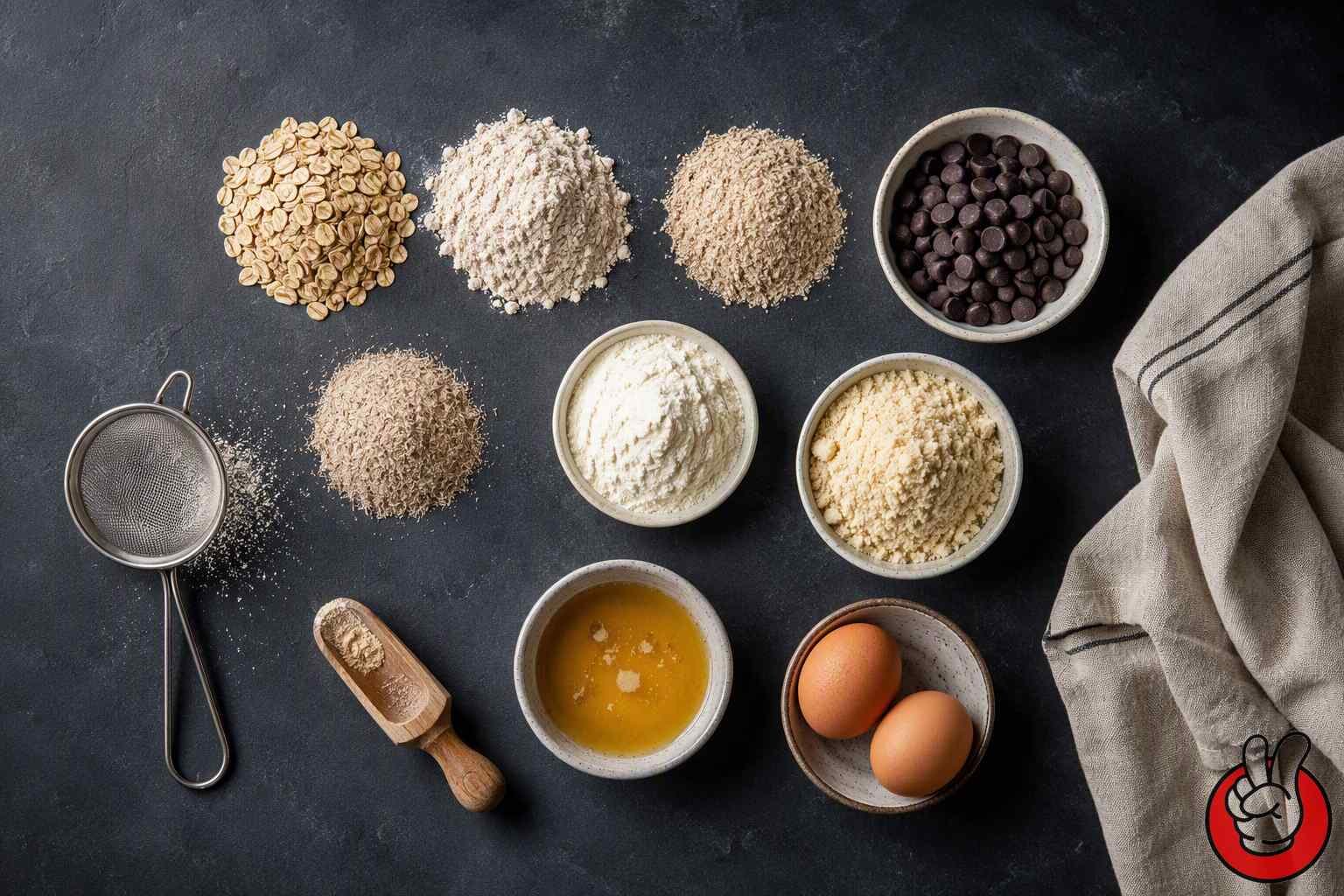
Fibre and Protein Ingredients for Functional Cookies
The Formulation Problem: Why Fibre and Protein Fight Flavour
A standard short-dough cookie is a simple system: flour, fat, sugar and a little water, with a flavour added at one or two percent of the dough. Enrichment changes every one of those relationships. The dry phase becomes chemically heterogeneous, the water distribution becomes uneven, and the fat phase is asked to lubricate ingredients that do not melt the way flour does.The sensory consequence is a product that tastes weak on the front, dry in the middle and bitter or metallic at the finish. Formulators who respond by simply increasing the flavour dose usually make the problem worse, because a larger dose amplifies the bitterness of the protein fraction as much as it lifts the intended profile.
How Fibre Binds Aroma and Water
Soluble fibres such as oat beta-glucan, psyllium and partially hydrolysed guar gum form viscous networks when they hydrate. That viscosity slows the release of aroma compounds into the headspace and onto the palate, so a flavour that measured correctly in the raw dough can taste muted in the baked product. The same network also competes for water, which slows flavour diffusion through the matrix even further.Insoluble fibres behave differently but cause a comparable problem. Cellulose and bran particles have a large internal surface area and can physically adsorb hydrophobic aroma compounds, holding them in pockets that saliva cannot easily reach. The practical result is the same: the flavour is present in the formula and absent from the experience.Water binding is the second half of the story. Every gram of soluble fibre holds several grams of water that would otherwise be available to dissolve sugar, hydrate flour proteins and support flavour release. This is why an enriched dough that feels correct at mixing can bake into a dry, crumbly cookie with a flat, closed flavour profile.
Protein's Bitter and Astringent Side
Protein ingredients arrive with their own taste. Whey and casein fractions carry sulphur and brothy notes. Pea and soy proteins bring beany, green and earthy characters along with measurable bitterness. Rice and lupin proteins are milder but still contribute a dry, powdery sensation that reads as astringency on the tongue.Bitterness in these systems is not merely a taste attribute; it is a flavour interaction. Bitter compounds suppress perceived sweetness and mask fruity and floral top notes, so a protein-enriched cookie often needs more sweetness and a more robust top note than its unenriched counterpart just to reach sensory parity.
The Texture Penalty of Enrichment
Texture is the hidden cost of enrichment. Protein competes with gluten and starch for water, producing a denser crumb that fractures differently in the mouth. Fibre interrupts the continuity of the dough, which reduces spread and produces a thicker, harder biscuit. A harder biscuit releases aroma more slowly, so the texture change feeds directly back into the flavour problem.Protein also browns faster. Maillard reactions involving the added amino acid load accelerate surface colour development, so a dough formulated for the standard bake time may emerge visually over-baked while the centre is still under-set. That accelerated browning adds roasted notes that can either support or wreck the intended flavour depending on the profile.
Designing a Flavour Architecture for an Enriched Base
A functional cookie needs its flavour built in layers rather than as a single dose. The practical model uses a bitterness-managing core, a sweetness and mouthfeel layer, and a top note chosen for its ability to survive a dry, hot, high-surface-area bake.
Mixing Cookie Dough With Added Fibre and Protein
Masking and Bitter Blocking
Bitterness management starts with chemistry rather than with flavour. Reducing free amino acid exposure, adding a small amount of salt to occupy the bitterness receptors, and using sweeteners with a clean rather than lingering profile all reduce the perceived bitter load before any flavouring is considered.Flavour selection then works with the remaining bitterness instead of against it. Profiles that naturally carry roasted, nutty, caramel or brown-sugar characters sit comfortably alongside the bready notes of oat and wheat fibre and the cooked notes of dairy protein. Attempting a delicate fruit profile in a heavily enriched base is usually a losing argument.
Sweetness Modulation and Perceived Fullness
Sweetness in an enriched cookie has to be judged in the baked product, not in the dough. Fibre and protein both suppress sweetness perception, and a formulation that tastes correctly sweet at mixing can read thin after baking because the fibre network slows sugar dissolution on the palate.Perceived fullness is the useful countermeasure. Slight increases in fat, a touch of maltodextrin or a well-chosen cream flavour can restore the sense of body that enrichment removes, allowing the sugar level to stay within the nutrition target while the cookie still tastes complete.
Top Notes That Survive a High-Fibre Bake
Cookie baking runs hotter and drier than most confectionery processes, and the porous surface of an enriched biscuit exposes a large area to moving air. Volatile top notes disappear quickly under those conditions, which is why robust chemistry such as vanillin, ethyl maltol, pyrazines and lactones forms the backbone of most successful functional cookie flavours.Delicate notes are better delivered late. A spray or dusting applied immediately after the bake, or a top-note component in the filling or inclusion rather than in the dough, keeps the fresh character where the heat cannot reach it.
Choosing Fibres and Proteins That Carry Flavour Well
Ingredient selection is the cheapest place to solve a flavour problem, because the sensory penalty of enrichment varies enormously between sources. Two fibres delivering an identical analytical result on the nutrition panel can differ by a wide margin in aroma binding and water competition.
Soluble Versus Insoluble Fibres
Soluble fibres deliver viscosity and structure, which helps with dough handling and gives a softer, chewier crumb, but they bind water strongly and can mute flavour release. They work best in cookies where a soft-baked texture is the target and where the flavour profile is robust enough to survive a slower release.Insoluble fibres are easier on flavour perception but harder on texture. They add bulk and crispness, thin the dough and reduce spread, producing a dry bite if the water level is not adjusted. A blend of soluble and insoluble fibre is generally the most practical route, allowing the formulator to trade a portion of the water-binding effect against part of the crispness gain.Particle size matters as much as fibre type. A fine-milled fibre blends into the dough and hides in the crumb, while a coarse one leaves visible flecks and a gritty mouthfeel that sensory panels penalise heavily in a sweet product.
Dairy, Plant and Blended Proteins
Whey and milk protein concentrates have the cleanest flavour profile of the mainstream options and perform well in cookies because they contribute structure and browning. They are, however, the least forgiving if the bake is pushed too far, because their lactose and protein load accelerate colour development.Plant proteins need more support. Pea and soy isolates benefit from a masking system and from flavours that lean into roasted and cocoa directions, while rice and oat proteins are milder and accept a wider range of profiles at the cost of a lower protein contribution per gram.Blending is often the pragmatic answer. A blend of a dairy protein for structure and browning with a plant protein for the nutrition panel spreads the flavour load across two milder ingredients instead of concentrating it in one difficult one, which materially reduces the masking work required.
Process Control in Functional Cookie Production
Once the formula is fixed, the process decides whether it reproduces. Enriched doughs are far more sensitive than standard ones to hydration, rest time and oven conditions, and small process drifts show up in the flavour before they show up in the appearance.
Dough Hydration and Resting
Soluble fibre needs time to hydrate, and protein needs time to absorb water before the gluten network is fully developed. A dough that is mixed and baked immediately will typically be stiff in the mixer and dry in the oven, because the added ingredients have taken water that the bake then has to drive off.A rest of twenty to sixty minutes at controlled temperature lets the fibre network hydrate and the water redistribute. The result is a dough that spreads predictably, a crumb that is less crumbly, and a flavour that releases more evenly because the matrix is more uniform.
Bake Profile and Spread
Enriched doughs spread less, so the bake profile usually needs a lower temperature and a slightly longer time to compensate for the reduced surface area and the higher thermal mass. A short, hot bake that works for a standard dough will typically darken the surface of an enriched one before the centre has set.Convection control matters here too. High air speed accelerates surface drying on a porous enriched biscuit and strips volatile aroma along with the moisture. Reducing fan speed, or using a bake schedule that begins with lower airflow, keeps more flavour in the product.Inclusion design is the third lever. Chocolate chips, fruit pieces and nut inclusions interrupt the continuous fibre matrix and create pockets where aroma is protected from the airflow. They also deliver bursts of familiar sweetness that reset the palate between mouthfuls, which is one of the most reliable ways to reduce the perceived bitterness of an enriched base without changing its nutrition profile.
Measuring Texture and Sensory Quality in Functional Cookies
Cooling, Packaging and Moisture Migration
Functional cookies are prone to moisture migration because the fibre and protein fractions hold water differently from the starch and sugar around them. During cooling, water moves towards the driest zone, and over shelf life it moves again towards the packaging surface, softening the outer layers while the centre becomes firmer.The remedy combines an accurate end-point moisture specification with packaging that matches the intended texture. A high-barrier film slows migration but holds moisture in; a permeable film allows a crisp cookie to stay crisp but shortens the window before rancidity becomes a risk, particularly when the recipe carries a significant fat load.None of this is a reason to avoid enrichment altogether. It is a reason to treat the fibre and protein blend as a flavour decision, evaluated with the same rigour as the flavour itself, because the ingredient that looks best on the nutrition panel is not always the ingredient that lets the cookie taste like a cookie.
Measuring Success: Sensory, Texture and Claims
Functional cookies cannot be evaluated on nutrition alone, because the entire commercial risk sits in whether the enriched product is eaten a second time. A structured measurement programme keeps that risk visible from the first prototype onwards.
Sensory Testing for Enriched Products
A useful panel protocol scores bitterness, dryness, sweetness, overall flavour intensity and aftertaste separately, and always includes the standard unenriched reference so that the size of the penalty is quantified rather than described. Consumer testing should then measure liking and, critically, purchase intent on the enriched product rather than on the concept.Trained and consumer panels answer different questions. The trained panel explains why a product fails; the consumer panel decides whether it matters. Running only one of the two usually leads to either a technically acceptable biscuit that nobody buys or a liked biscuit that drifts out of specification.
Nutrition and Label Claims
The enrichment target should be set from the claim the brand intends to make, because the thresholds are legal rather than sensory. Under the EU nutrition and health claims framework a product needs a defined minimum fibre content to describe itself as a source of fibre or high in fibre, and protein claims follow a separate but similarly structured rule based on the energy contribution of protein.The practical implication is that the formulator should define how much enrichment is required for the claim before the flavour work begins. Chasing an unnecessary margin of protein adds bitterness and cost for no commercial benefit, while missing the threshold by a few tenths of a percent wastes the entire development programme.
Common Defects in Functional Cookies and How to Fix Them
Flavour disappears after baking. Volatile top notes stripped by heat and airflow. Move part of the profile to a post-bake application and rebuild the base from heat-stable chemistry.
Persistent bitter or beany aftertaste. Protein source dominating the finish. Add salt to occupy bitterness receptors, blend in a milder protein, and shift the flavour towards roasted or cocoa directions.
Very hard, dry bite. Insoluble fibre and under-hydration reducing spread. Increase water, extend the rest, and rebalance the soluble to insoluble fibre ratio.
Surface too dark before the centre sets. Accelerated Maillard browning from the added protein and sugar load. Lower the oven temperature, reduce airflow in the first stage, and confirm the reducing-sugar level.
Softer than specified after two weeks. Moisture migration towards the packaging surface. Tighten the end-point moisture window and review film barrier properties against the intended texture.
Flavour intensity varies between batches. Inconsistent fibre hydration or protein lot variation. Fix the rest time, control water temperature, and add a rapid baked-sample sensory check per batch.
Conclusion: Flavour Is the Nutrition Strategy
A functional cookie only delivers its nutrition if it is eaten, and it is only eaten if it tastes like something worth choosing. Flavour is therefore not a finishing step in this category; it is the mechanism by which fibre and protein become commercially useful.The approach that works is sequential. Quantify the claim first so the enrichment level is defined by law rather than by ambition. Choose fibres and proteins for their sensory behaviour as well as their numbers. Build the flavour in layers, using robust chemistry for the base and late addition for freshness. Then control hydration, rest and airflow so the bake reproduces what the bench sample promised.Our flavour team supports functional bakery development with masking systems, heat-stable profiles and application testing on enriched doughs. If you are launching a high-fibre or high-protein cookie, we can supply matched flavours and the technical support that goes with them: +86 0769 8838 0789, info@cuiguai.com, WhatsApp and Telegram +86 189 2926 7983. The full range of bakery and confectionery flavours is listed inour product catalogue. For enriched doughs where cocoa and roast notes carry the masking work, the rich chocolate flavour and the roasted sweet potato flavour are both useful starting points.Where long shelf life is the limiting factor, the principles behind controlled release in confectionery are set out in our article onencapsulation and release science, which explains how encapsulated systems can protect delicate top notes through a long distribution chain.
Finished Fibre and Protein Cookies With CUIGUAI Flavor
U.S. Food and Drug Administration, 21 CFR Part 101 Subpart D, Specific Requirements for Nutrient Content Claims, including the fibre and protein claim thresholds. https://www.ecfr.gov/current/title-21/chapter-I/subchapter-B/part-101/subpart-D European Union, Regulation (EC) No 1924/2006 on nutrition and health claims made on foods, and Regulation (EU) No 1169/2011 on the provision of food information to consumers. https://eur-lex.europa.eu/legal-content/EN/TXT/?uri=CELEX%3A32006R1924 European Food Safety Authority, Dietary Reference Values for nutrients, including carbohydrate and dietary fibre. https://www.efsa.europa.eu/en/topics/topic/dietary-reference-values U.S. Department of Agriculture, Agricultural Research Service, FoodData Central, nutrient composition data used in fibre and protein formulation. https://fdc.nal.usda.gov/ Institute of Food Technologists, Journal of Food Science, peer-reviewed research on fibre functionality, protein bitterness and aroma binding in bakery systems. https://ift.onlinelibrary.wiley.com/journal/17503841