
Author: R&D Team, CUIGUAI Flavoring
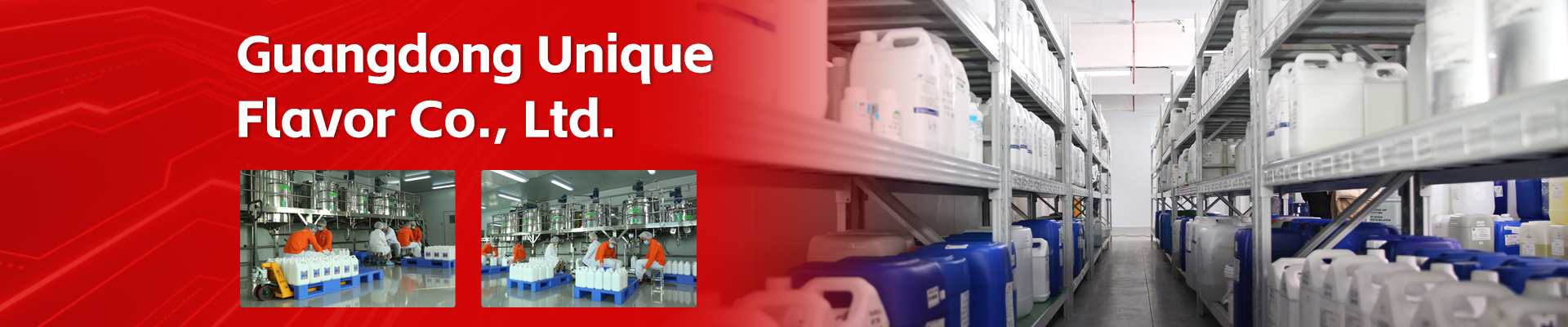
Published by: Guangdong Unique Flavor Co., Ltd.
Last Updated: May 18, 2026
WhatsApp & Telegram: +86 189 2926 7983

Modern Flavor Manufacturing Facility
The creation of food and beverage flavorings is a precise synthesis of art and rigorous science. As a specialized manufacturer of premium food and beverage flavorings, we recognize that delivering the perfect sensory profile to our clients requires more than just culinary expertise; it demands an uncompromising commitment to industrial safety and regulatory compliance. While the flavorings consumed in a finished beverage or confectionery product are entirely safe and delightful, the highly concentrated raw materials and volatile chemical compounds used during the manufacturing process can present significant hazards.
In the modern global supply chain, particularly for our esteemed clients operating within the Russian Federation and the broader Eurasian Economic Union (EAEU), understanding the dichotomy between safe finished goods and hazardous raw materials is paramount. Importers, product developers, and plant managers must possess a profound understanding of how flavorings are handled, the regulatory frameworks that govern them, and the engineering controls required to mitigate risk.
This comprehensive technical guide explores the intricate landscape of handling hazardous flavors. We will delve into the specific chemical risks, outline state-of-the-art engineering and administrative controls, and provide a deep dive into the regulatory compliance necessary for seamless integration into EAEU markets, specifically focusing on TR CU standards. By the end of this treatise, industry professionals will have a comprehensive framework for evaluating the safety and reliability of their flavoring supply chain.
To the consumer, flavorings evoke memories, stimulate the palate, and define the identity of a food or beverage brand. However, from an industrial manufacturing perspective, flavorings are complex chemical mixtures. A single artificial or natural strawberry flavor may contain upwards of fifty distinct chemical compounds, including esters, aldehydes, ketones, and alcohols.
The hazard arises from the concentration. Food flavorings are typically used in final products at fractions of a percent (e.g., 0.05% to 0.2%). Yet, in the manufacturing and shipping phases, these compounds exist in 100% concentrated forms. At these high concentrations, compounds that are benign or even beneficial in a finished beverage become highly reactive.
The volatility of flavor compounds is exactly what makes them effective—they evaporate easily, reaching the olfactory receptors in the human nose to create the perception of taste and aroma. In a factory setting, this high vapor pressure means that flavor compounds can easily volatilize into the ambient air.
When workers are exposed to these concentrated vapors over an eight-hour shift, day after day, the cumulative exposure can lead to severe occupational health issues if proper protocols are not strictly enforced. Furthermore, many of the solvents used to carry flavor compounds—such as ethanol, propylene glycol, or triacetin—have low flash points, introducing the risk of fire and explosion.
Therefore, handling “hazardous flavors” is not about dealing with inherently toxic poisons; it is about managing highly concentrated, volatile, and reactive organic chemistry. As a responsible partner to food and beverage brands worldwide, we engineer our safety protocols to address these specific physicochemical properties, ensuring that our products reach your facility safely, stably, and ready for integration. To see how we apply these rigorous safety principles to our commercial offerings, we invite you to explore our comprehensive range of meticulously tested flavor products, designed with both superior taste and ultimate safety in mind.
Compliance is the foundation of industrial safety. It is not merely a bureaucratic hurdle; it is a vital communication tool that ensures every stakeholder in the supply chain—from the chemical synthesizer to the final beverage bottler—understands the risks and the necessary mitigations. For clients operating in Russia and the EAEU, regulatory compliance is exceptionally stringent, blending international best practices with robust regional standards.
Before a flavor can be considered for use, it must be rigorously evaluated for safety. Globally, the Flavor and Extract Manufacturers Association (FEMA) sets the gold standard. Through independent expert panels, FEMA evaluates flavor ingredients and grants them GRAS (Generally Recognized As Safe) status under specific conditions of intended use. Similarly, the European Food Safety Authority (EFSA) provides scientific advice and regulatory frameworks for the European market.
However, recognizing that a compound is safe for human ingestion is only half the battle. To address the occupational and logistical hazards of handling concentrated flavors, manufacturers rely on the Globally Harmonized System of Classification and Labelling of Chemicals (GHS). GHS provides a standardized approach to defining health, physical, and environmental hazards, ensuring that Safety Data Sheets (SDS)—or Паспорт безопасности (PB) in the Russian context—communicate critical information uniformly across language barriers.
For the Russian market, international standards must be contextualized within the Technical Regulations of the Customs Union (TR CU). The most critical regulation for our industry is TR CU 029/2012: Safety Requirements for Food Additives, Flavorings, and Technological Aids. This comprehensive regulation dictates not only which flavoring substances are permitted but also establishes maximum dosage levels, purity criteria, and stringent labeling requirements. Furthermore, TR CU 021/2011 on Food Safety outlines the overarching hygienic and sanitary requirements for food production facilities.
For a specialized flavoring manufacturer to successfully partner with a Russian beverage or food enterprise, they must provide exhaustive documentation proving adherence to these standards. This includes:
Understanding the administrative burden and the strict quality expectations of the Russian market, our manufacturing processes are audited and aligned to produce EAC-compliant documentation natively. We understand that for a Russian plant manager, a missing EAC declaration or an improperly formatted SDS is not just an inconvenience; it can halt production, cause customs delays at the border, and jeopardize consumer safety.

SDS and EAC Compliance Documents
To implement effective safety protocols, one must first deeply understand the specific hazards inherent in flavoring chemistry. Below, we dissect the primary risk categories encountered in the creation of premium food and beverage flavorings.
Perhaps the most well-documented occupational hazard in the flavoring industry involves a class of compounds known as diketones, most notably diacetyl (2,3-butanedione) and its substitute, 2,3-pentanedione. Diacetyl is a naturally occurring compound found in butter, cheese, and yogurt, and it is synthetically utilized to impart a rich, buttery, or creamy profile to baked goods, dairy alternatives, and certain beverages.
While perfectly safe to consume in a finished food product, the inhalation of concentrated diacetyl vapors during the manufacturing process has been linked to a severe, irreversible lung disease called bronchiolitis obliterans, colloquially known as “popcorn lung.”
The National Institute for Occupational Safety and Health (NIOSH) has established strict Recommended Exposure Limits (RELs) for these compounds. According to NIOSH, workplace exposure to diacetyl should not exceed 5 parts per billion (ppb) as a time-weighted average (TWA) during an 8-hour workday.
Handling diketones requires the highest level of administrative and engineering controls. In our specialized manufacturing facilities, compounds containing diacetyl are processed in entirely isolated environments, utilizing continuous air monitoring and heavily restricted access protocols.
The vast majority of flavorings are not water-soluble; they require organic solvents to extract, stabilize, and carry the volatile flavor compounds. The most common solvent used in the industry is ethanol (ethyl alcohol). While ethanol is an excellent, food-grade carrier, it is highly flammable.
Flavor extracts based on high-proof ethanol have extremely low flash points (the lowest temperature at which a liquid can form an ignitable mixture in air). For example, a pure ethanol solvent has a flash point of roughly 13°C (55°F). In a manufacturing setting, static electricity from pouring liquids, a spark from a non-insulated motor, or even a hot surface can ignite the vapors, leading to catastrophic fires or explosions.
Beyond ethanol, other solvents and volatile organic compounds (VOCs) present similar risks. Mitigating flammability risks requires stringent adherence to ATEX (Atmosphères Explosibles) directives or equivalent EAEU/GOST standards regarding explosion-proof industrial environments.
Creating complex flavor profiles often requires the use of organic acids to provide tartness, preservation, or specific sensory “bite.” Common acids include citric acid, malic acid, lactic acid, and, in more concentrated synthesis stages, glacial acetic acid.
In their concentrated forms, these acids are highly corrosive. They can cause severe chemical burns upon contact with the skin or eyes. Furthermore, the handling of dry, powdered acids (such as granular citric acid) introduces the risk of corrosive dust, which can severely irritate the respiratory tract and mucous membranes of workers if inhaled.
The industry relies heavily on natural essential oils—such as citrus oils (lemon, orange, bergamot), cinnamon bark oil, and peppermint oil. These natural extracts are incredibly potent. Many components of essential oils, such as D-limonene or cinnamaldehyde, are known skin sensitizers.
Prolonged or repeated dermal exposure to these concentrated oils can cause workers to develop allergic contact dermatitis. Once a worker becomes sensitized, even minute exposures can trigger severe immune responses. Proper handling mandates absolute skin protection and protocols to prevent aerosolization of these oils during mixing and pouring phases. To learn more about how we safely process raw materials to create stunning end-products, you can read more of our industry insights on flavor manufacturing.
The hierarchy of hazard controls dictates that the most effective way to protect workers and the product is to engineer the hazard out of the process entirely. Administrative rules and Personal Protective Equipment (PPE) are secondary lines of defense. The primary defense is the physical design of the manufacturing facility.
In a state-of-the-art flavoring plant, general room ventilation is insufficient. We rely on sophisticated Local Exhaust Ventilation (LEV) systems. These systems utilize extraction hoods positioned directly over mixing vats, weighing stations, and packaging lines.
The goal of LEV is to capture volatile organic compounds (VOCs), hazardous vapors (like diacetyl), and corrosive dusts at the exact point of emission, preventing them from entering the worker’s breathing zone.
Furthermore, the general HVAC system must be engineered to maintain specific pressure differentials. For example, rooms where highly volatile or hazardous chemicals are handled are kept under negative pressure relative to adjacent hallways. This ensures that if a door is opened, clean air flows into the hazardous area, rather than contaminated air flowing out into the rest of the facility. The extracted air is then scrubbed using industrial-grade HEPA filters and activated carbon systems before being released into the environment, ensuring compliance with EAEU environmental emission standards.
The most dangerous moment in flavor manufacturing is the transfer of concentrated raw materials from storage drums to mixing vats. Traditional manual pouring exposes workers to splashes, spills, and massive vapor releases.
To mitigate this, specialized manufacturers employ closed-loop processing systems. Raw materials are pumped directly from sealed storage containers into the mixing reactors through a network of specialized, chemically resistant piping (often utilizing high-grade stainless steel or PTFE).
Automated dosing systems, controlled by precision PLCs (Programmable Logic Controllers), measure the exact mass of the required chemicals and inject them into the closed reactor. This not only eliminates human exposure to hazardous chemicals but also ensures absolute precision and batch-to-batch consistency—a critical factor for our clients who demand identical flavor profiles for their beverages across years of production.
Given the heavy reliance on flammable solvents like ethanol, significant portions of a flavor manufacturing facility must be designated as hazardous zones (e.g., ATEX Zone 1 or Zone 2).
In these areas, every piece of equipment must be explosion-proof. This includes:

Industrial Worker in Full PPE
While engineering controls form the physical barrier against hazards, administrative controls and proper PPE usage form the operational barrier. A safety-first culture is cultivated through continuous training, strict standard operating procedures (SOPs), and rigorous oversight.
A specialized flavor manufacturer invests heavily in human capital. Operators handling raw materials must undergo extensive training on chemical hygiene. This includes understanding how to read and interpret complex Safety Data Sheets (SDS), recognizing the early signs of chemical exposure, and executing emergency response procedures flawlessly.
For our Russian partners, we ensure that our safety culture mirrors the stringent requirements of Russian occupational health laws (GOST R standards regarding labor safety). We believe that a manufacturer who treats their own workers with the highest regard for safety translates that same care into the quality and purity of the product they ship to your facility.
When engineering and administrative controls cannot completely eliminate a hazard, PPE is mandatory. In flavor manufacturing, PPE is highly specialized:
The selection of PPE is heavily data-driven, relying on the specific breakthrough times of chemical gloves against the complex solvent mixtures used in our flavor formulations.
The responsibility of a specialized manufacturer does not end when the product is packaged. The safe storage and transportation of hazardous flavorings are critical, especially considering the vast geographical expanses and extreme climate variations of the Russian Federation.
In the warehouse, chemical segregation is vital. Flammable flavors (ethanol-based) must be stored in specialized, climate-controlled, fire-rated rooms, completely separated from strong oxidizers or corrosive acids. Proper ventilation in storage areas prevents the dangerous accumulation of vapors from micro-leaks.
Temperature control is also a matter of safety, not just quality. Many flavor compounds degrade rapidly under high heat, potentially forming unwanted and sometimes hazardous byproducts, or building up dangerous internal pressure within their containers.
Shipping highly concentrated flavorings requires deep expertise in dangerous goods logistics. Transporting these materials by road, sea, or air is governed by strict international codes, such as the ADR (European Agreement concerning the International Carriage of Dangerous Goods by Road), IMDG (International Maritime Dangerous Goods), and IATA regulations.
When shipping to our clients in Russia and the EAEU, we navigate complex logistics to ensure total compliance. Products must be packaged in UN-certified drums or intermediate bulk containers (IBCs) that have been rigorously drop-tested and pressure-tested. Proper hazard diamonds and UN numbers must be visibly placarded.
Furthermore, we account for the Russian winter. Many liquid flavorings can freeze or undergo phase separation at sub-zero temperatures. We utilize temperature-controlled freight (reefer trucks) and specialized thermal blanketing to ensure that the chemical integrity of the flavor remains perfectly stable from our manufacturing floor in the temperate zone all the way to a beverage plant in Siberia.
Despite the most rigorous preventative measures, a responsible manufacturer must plan for the worst-case scenario. Industrial chemical spills in a flavoring plant require immediate, highly coordinated responses to prevent environmental contamination and protect worker health.
Our facilities maintain comprehensive Spill Prevention, Control, and Countermeasure (SPCC) plans. In the event of a solvent spill, standard water cannot be used, as it may spread flammable liquids. Instead, highly trained emergency response teams utilize specialized chemical absorbents, non-sparking containment booms, and foam fire-suppression systems.
Environmental compliance is equally critical. Effluent from flavor manufacturing can have exceptionally high Biological Oxygen Demand (BOD) and Chemical Oxygen Demand (COD). Wash water from cleaning the stainless steel vats must be captured and treated in sophisticated on-site wastewater treatment facilities to neutralize acids and digest organic compounds before any discharge into municipal systems. This commitment to environmental stewardship aligns with the highest international and EAEU ecological standards.
For a food or beverage brand, the flavoring you choose is the soul of your product. However, the manufacturer you partner with represents the security of your supply chain.
When an importer or factory manager in Russia purchases flavorings, they are not just buying a taste profile; they are assuming liability. If a supplier cuts corners on safety protocols, uses substandard solvents, or fails to provide accurate, EAC-compliant documentation, the burden falls entirely on the client. Customs delays, failed safety audits, and even product recalls can devastate a brand’s reputation and bottom line.
By partnering with a specialized manufacturer deeply committed to safety protocols and regulatory compliance, you mitigate these risks entirely. Our investment in closed-loop engineering, rigorous analytical testing (using GC-MS to verify purity and absence of hazardous contaminants), and EAEU regulatory expertise means that you receive a product that is not only sensorially spectacular but fundamentally safe and seamlessly importable.
We understand the Russian market’s demand for high-quality, reliable, and fully documented raw materials. Our dedicated regulatory affairs team works tirelessly to ensure that every drop of flavoring we export is accompanied by impeccable TR CU 029/2012 documentation, allowing your procurement and QA teams to operate with total peace of mind. We invite you to explore our compliant beverage flavorings and experience the intersection of culinary art and industrial precision.
The handling of hazardous flavors is a highly specialized discipline that requires a profound respect for chemical physics, a deep understanding of international and regional regulatory frameworks like the EAEU’s TR CU standards, and significant capital investment in safety engineering. While the concentrations used in our production facilities pose genuine risks, the meticulous execution of our safety protocols ensures that these hazards are contained, controlled, and neutralized.
For food and beverage manufacturers, understanding these behind-the-scenes complexities is crucial for selecting a reliable supply chain partner. A manufacturer’s commitment to occupational safety and regulatory compliance is the most accurate indicator of their overall product quality and reliability. We pride ourselves on setting the industry standard for both sensory excellence and uncompromising safety.

Finished Goods and Flavor Extracts
Ready to elevate your product line with premium, safely manufactured, and fully EAEU-compliant flavorings? Our team of technical experts and flavor chemists is standing by to assist you in developing your next market-leading product. Whether you need assistance navigating TR CU 029/2012 compliance, require tailored flavor matching, or wish to experience our quality firsthand, we are here to help.
Contact us today for a specialized technical consultation or to request a free sample tailored to your specific application requirements. Let us bring the perfect flavor to your brand, safely and reliably.
| Contact Channel | Details |
| 🌐 Website: | www.cuiguai.cn |
| 📧 Email: | info@cuiguai.com |
| ☎ Phone: | +86 0769 8838 0789 |
| 📱 WhatsApp: | +86 189 2926 7983 |
| 📱 Telegram: | +86 189 2926 7983 |
| 📍 Factory Address | Room 701, Building 3, No. 16, Binzhong South Road, Daojiao Town, Dongguan City, Guangdong Province, China |
Citations for Further Technical Reading:
Copyright © 2025 Guangdong Unique Flavor Co., Ltd. All Rights Reserved. Return and Exchange Policy


