Author: R&D Team, CUIGUAI Flavoring
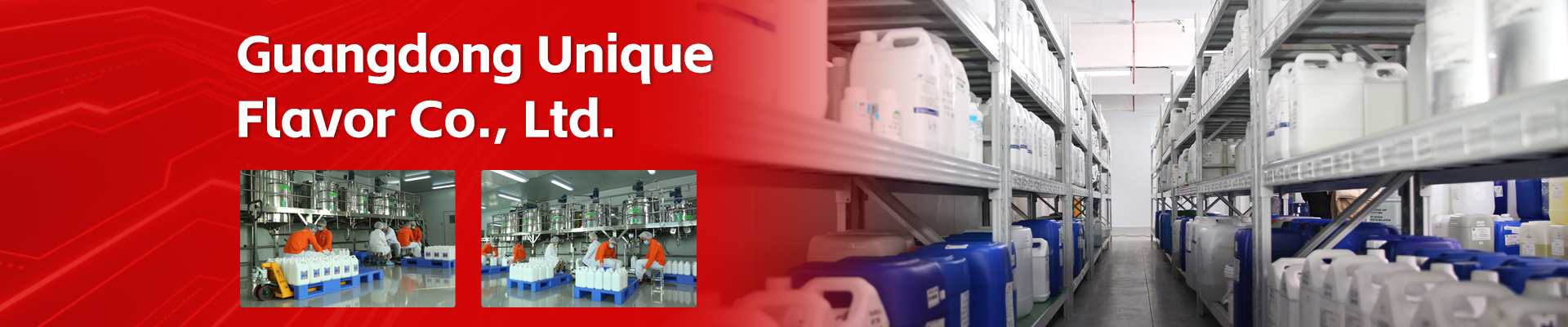
Published by: Guangdong Unique Flavor Co., Ltd.
Last Updated: Apr 30, 2026

Bottling Process
In the global beverage industry, the “Hero Flavor” is the soul of the product. Whether it is a refreshing citrus soda, a complex botanical functional water, or a traditional fermented drink like Kvass, the initial flavor profile is what captures the consumer’s heart. However, the true challenge for R&D managers and beverage technologists is not just creating that profile—it is ensuring its integrity throughout a 12-month shelf life.
Flavor stability is the Achilles’ heel of beverage innovation. From the moment of production to the moment of consumption, flavor molecules are under constant attack from oxidation, hydrolysis, light-induced degradation, and temperature fluctuations. For manufacturers targeting competitive markets—including the rapidly evolving markets in Russia and the CIS—mastering the science of stability is the difference between a market leader and a failed product.
This guide provides an exhaustive technical analysis of the chemical and physical factors affecting beverage flavor stability and outlines advanced strategies to protect your sensory investment.
To solve the problem of stability, we must first understand the enemy. Flavoring substances are volatile chemical compounds, often containing functional groups that are inherently reactive.
Oxidation is the most prevalent cause of off-flavor development, particularly in citrus-based beverages which contain high concentrations of terpenes. Terpenes like limonene and citral are prone to autoxidation.
When citral (found in lemon and lime oils) is exposed to oxygen, it undergoes a series of reactions. According to industry-standard chemical data often cited by the U.S. Food and Drug Administration (FDA) regarding flavoring safety, citral can degrade into p-cymene and p-methylacetophenone. These degradation products do not taste like lemon; they taste like turpentine or old soap.
The oxidation process follows a free radical mechanism:
Most soft drinks and fruit-flavored beverages have a low pH (between 2.5 and 3.5). In these acidic aqueous environments, esters—the molecules responsible for fruity notes like strawberry, apple, and pineapple—undergo hydrolysis.

In this reaction, the ester is broken back down into its parent acid and alcohol. Because the ester has a much lower sensory threshold (it’s more potent) than the acid or alcohol, the beverage effectively “loses” its fruitiness over time, becoming flat and overly acidic.
In beverages containing proteins or amino acids (such as plant-based milks or protein waters) and reducing sugars, the Maillard reaction can occur even at room temperature. While this reaction is desirable in coffee or toasted bread, in a “Fresh Peach” flavored protein drink, it creates brown pigments and “cooked” or “cereal” off-notes that mask the delicate fruit profile.
A flavoring does not exist in a vacuum. It interacts with every other component in the beverage “matrix.”
The global shift toward sugar reduction has significantly impacted flavor stability. Sucrose (table sugar) acts as a flavor fixative. It increases the viscosity of the liquid and lowers the vapor pressure of volatile flavor compounds, essentially “trapping” them in the drink.
When manufacturers switch to high-intensity sweeteners (HIS) like Stevia, Erythritol, or Sucralose, this fixative effect is lost. Without the “body” of sugar, top-note flavors escape more easily, and the shelf life appears shorter. Furthermore, some HIS can interact chemically with flavorings, creating a lingering bitter aftertaste. Utilizing high-performance liquid beverage flavorings specifically designed for low-sugar bases is essential to restore this lost balance.
Water is the primary ingredient in any beverage. The presence of transition metal ions, particularly Iron (Fe2+) and Copper (Cu2+), acts as a potent catalyst for oxidation. Even at concentrations below 1 ppm, these metals can accelerate the degradation of citrus oils by tenfold.
Manufacturers should use deionized or reverse-osmosis water and may need to consider chelating agents like EDTA or natural alternatives like citric acid to sequester these metal ions. If you are struggling with water quality issues in your local manufacturing plant, exploring flavoring application guides can provide insights into adapting your formula.

Molecular Encapsulation
To protect the most sensitive flavor components, flavor houses like CUIGUAI Flavors utilize advanced physical delivery systems.
Microencapsulation involves coating flavor droplets in a protective matrix, such as Gum Arabic, Modified Starch, or Maltodextrin.
In RTD (Ready-to-Drink) beverages, essential oils must be dispersed in water. Because oils are less dense than water, they tend to float to the top—a phenomenon known as “creaming” or “ringing.”
To prevent this and enhance stability, we use weighting agents like SAIB (Sucrose Acetate Isobutyrate) or Ester Gum to increase the oil’s density until it matches the water phase (1.00 g/cm3. Furthermore, reducing droplet size to the “nano” scale (100–200 nm) via high-pressure homogenization ensures the emulsion remains stable according to Stokes’ Law:

The manufacturing process is often the most violent moment in a flavor’s life.
Before filling, many premium manufacturers use de-aeration to remove dissolved oxygen from the beverage. Reducing dissolved oxygen (DO) levels to below 0.5 mg/L is one of the most effective ways to extend the life of a citrus or berry-flavored drink. This is particularly critical for beverages using natural fruit extracts which lack the synthetic stabilizers found in artificial alternatives.
Even a perfectly formulated beverage will fail if the packaging is inadequate.
UV light provides the activation energy needed for flavor degradation. Riboflavin (Vitamin B2), often present in juices or added to energy drinks, acts as a photosensitizer. When hit by light, it reaches an excited state and transfers energy to oxygen, creating singlet oxygen—a highly reactive species that destroys flavors instantly.
PET bottles are slightly permeable to oxygen and CO2. Over time, oxygen seeps in and CO2 (which provides the “bite” and acidity that balances flavor) seeps out. For products with a long logistics tail, such as those distributed across the vast CIS region, high-barrier PET or aluminum cans are preferred.

Logistics & Routes
The Russian and CIS markets (including Kazakhstan, Belarus, and Uzbekistan) present a unique landscape for beverage manufacturers. Understanding the B2B purchasing behavior and regional technical requirements is key to success.
In Russia, there is a deep-seated appreciation for traditional, “earthy” profiles. Kvass (fermented rye), Mors (berry punch), and Tarkhun (tarragon) remain staples. However, the “Zozh” (Zdorovyy Obraz Zhizni – Healthy Lifestyle) movement has triggered a massive shift toward:
All flavorings used in Russia and the EAEU must comply with the Technical Regulations of the Customs Union. These regulations are strict regarding the dosage of certain substances (like coumarin or thujone). When sourcing imported flavoring ingredients, manufacturers must ensure that the “Technical Data Sheet” (TDS) and “Safety Data Sheet” (SDS) are compliant with GOST standards.
Distributing beverages from St. Petersburg to Vladivostok involves crossing multiple climate zones. A product might be stored in a warehouse at +30℃ in summer or sit in a truck at -40℃ in winter.
Russian manufacturers prioritize technical authority and local reliability. They prefer suppliers who can provide not just a flavoring, but a “turnkey” solution including dosage recommendations and stability data. Providing localized support and samples is the fastest way to build trust in this B2B environment. For more on these regional trends, see our post on innovative flavor technology in the Eurasian market.
To guarantee a 12-month shelf life, you cannot simply wait 12 months. R&D labs use Accelerated Shelf-Life Testing (ASLT).
The rate of chemical reactions usually doubles for every 10℃ increase in temperature. This is known as the Q10 value.
By storing samples at 35℃ or 45℃, we can simulate months of aging in just weeks.
Gas Chromatography-Mass Spectrometry (GC-MS) allows us to quantify the loss of specific “marker” compounds. For example, if a strawberry flavor loses 40% of its ethyl butyrate during ASLT, we know the “freshness” of the profile will be significantly compromised.
No machine can replace the human palate. A trained sensory panel uses “Duo-Trio” or “Triangle Tests” to determine at what point the aged sample becomes statistically different from the “Gold Standard” (the fresh control).
At CUIGUAI Flavors, we utilize a multi-layered approach to maximize stability for our clients:
Whether you are a startup in Almaty or a major bottling plant in Moscow, our custom flavor solutions are engineered to withstand the specific challenges of your production line.
The industry is moving toward “Clean Label” stabilization. Consumers no longer want to see chemical-sounding names like EDTA or BHA on their labels.
Improving flavor stability in beverages is not a single task; it is a holistic discipline that combines organic chemistry, fluid dynamics, and process engineering. As the beverage market becomes increasingly crowded, the ability to deliver a consistent, high-quality flavor profile over time is the ultimate competitive advantage.
By understanding the chemical vulnerabilities of your flavorings, optimizing your beverage matrix, and choosing the right technical partner, you can ensure that your product remains as vibrant on the day it is consumed as it was on the day it was formulated.
At CUIGUAI Flavors, we bridge the gap between “great taste” and “long-term stability.” Our expertise in the global and CIS markets ensures that your brand’s promise is kept, one bottle at a time.

R&D Lab CTA
Secure Your Brand’s Flavor Integrity Today.
Are you facing challenges with flavor fading, off-notes, or emulsion separation? Don’t leave your product’s success to chance. CUIGUAI Flavors provides the technical expertise and high-performance ingredients you need to excel in the global beverage market.
| Contact Channel | Details |
| 🌐 Website: | www.cuiguai.cn |
| 📧 Email: | info@cuiguai.com |
| ☎ Phone: | +86 0769 8838 0789 |
| 📱 WhatsApp: | +86 189 2926 7983 |
| 📱 Telegram: | +86 189 2926 7983 |
| 📍 Factory Address | Room 701, Building 3, No. 16, Binzhong South Road, Daojiao Town, Dongguan City, Guangdong Province, China |
Copyright © 2025 Guangdong Unique Flavor Co., Ltd. All Rights Reserved.