Author: R&D Team, CUIGUAI Flavoring
Published by: Guangdong Unique Flavor Co., Ltd.
Last Updated: Aug 18, 2026
WhatsApp & Telegram: +86 189 2926 7983
Email:info@cuiguai.com

Matcha Citrus Cream Beverages
Matcha has undergone a remarkable transformation over the past decade — from a niche ceremonial Japanese ingredient to one of the most versatile and commercially significant flavor platforms in global food and beverage product development. Its vibrant green color, complex umami-vegetal-sweet flavor profile, and strong health-ingredient associations have made it a first-choice canvas for flavor innovation. Yet matcha’s greatest untapped commercial potential lies not in its standalone application, but in its synergies with two complementary flavor categories: citrus and cream.
The pairing of matcha with citrus introduces a high-contrast flavor dynamic — the bright, acidic sharpness of lemon, yuzu, or bergamot cutting through matcha’s characteristic bitter-vegetal depth, creating a layered sensory experience that is simultaneously refreshing and complex. The pairing of matcha with cream or dairy-type flavors creates a completely different dynamic: the fat-soluble compounds in cream mediate matcha’s bitterness, amplify its sweetness, and produce a rich, indulgent profile with wide consumer appeal. When all three are combined — matcha, citrus, and cream — the result is one of the most sophisticated flavor platforms available to food and beverage product developers.
This article provides a technically rigorous and commercially actionable guide to matcha flavor innovation, covering the chemistry of matcha’s key flavor-active compounds, the science of citrus-matcha and cream-matcha flavor interactions, formulation parameters for key product categories, and the regulatory landscape governing matcha and its pairings.
Matcha (抹茶, tencha tea ground to powder) differs fundamentally from other green tea preparations in its compound profile. Because matcha is made from shade-grown tencha — where plants are covered for 20–30 days before harvest to block direct sunlight — photosynthetic activity is reduced, suppressing catechin biosynthesis while elevating chlorophyll, theanine, and caffeine levels. The resulting powder contains the full spectrum of leaf compounds, not just those soluble in hot water. This makes matcha uniquely rich in both flavor-active and bioactive compounds:
| Compound Class | Key Compounds | Flavor Contribution | Concentration (typical) |
| Catechins | EGCG, EGC, ECG, EC | Bitterness, astringency | 8–15% dry weight |
| Amino acids | L-theanine, glutamic acid, arginine | Umami, sweetness, body | 2–5% dry weight |
| Caffeine | Caffeine | Bitterness, stimulant | 2.5–3.5% dry weight |
| Chlorophylls | Chlorophyll a, chlorophyll b | Vegetal, ‘green’ character; color | 0.6–1.2% dry weight |
| Volatile aromatics | Linalool, geraniol, (Z)-3-hexenol, β-ionone | Floral, grassy, sweet | Trace–50 ppm |
| Saponins | Tea saponins | Bitter, foamy character | 0.1–1% |
| Gallic acid | Gallic acid | Astringent, slightly tart | 0.05–0.3% |
The interaction between L-theanine and caffeine is particularly significant for matcha’s distinctive flavor and functional character. L-theanine (γ-glutamylethylamide) at 3–5% dry weight in shade-grown matcha modulates caffeine’s bitterness through the formation of theanine-caffeine complexes, producing the characteristic ‘calm alertness’ associated with matcha consumption and simultaneously softening the bitterness that would otherwise dominate if caffeine were the sole contributor.
Epigallocatechin gallate (EGCG) is the most abundant and most studied catechin in matcha, typically present at 4–8% of dry weight. From a flavor chemistry perspective, EGCG is the primary driver of matcha’s astringency — it binds to salivary proteins (proline-rich proteins, mucins) and oral epithelial cell membranes, causing the puckering, drying mouthfeel sensation that characterizes strong matcha.
According to a review published in the journal Molecules (2017), EGCG also demonstrates significant antioxidant capacity with an ORAC value approximately 125 times higher than vitamin C — a property that contributes to matcha’s strong ‘superfood’ consumer associations but also creates formulation challenges. EGCG oxidizes readily in the presence of dissolved oxygen, generating brown pigments that degrade matcha’s signature green color. This oxidation challenge is amplified in acidic environments (notably in citrus pairings) and requires careful management in product formulation.
While EGCG and theanine define matcha’s taste character, it is the volatile aroma fraction that creates the complex, multi-dimensional sensory experience consumers associate with premium matcha. Key matcha volatile compounds include:
Understanding this volatile profile is essential for citrus-matcha flavor pairing. The linalool and geraniol in matcha share structural and aromatic relationships with citrus terpenes, creating chemical bridges that explain why citrus-matcha pairings often feel intuitively natural — the flavor compounds are literally related.
The citrus-matcha pairing is not merely a trending combination — it is grounded in fundamental flavor chemistry principles. Three mechanisms explain why citrus and matcha work so effectively together:
Different citrus varieties create distinctly different flavor dynamics when paired with matcha:
| Citrus Variety | Primary Aroma Compounds | Flavor Character | Matcha Pairing Profile | Best Applications |
| Yuzu (Citrus junos) | Yuzu ketone, linalool, limonene, geraniol | Floral, tart, complex; Japanese heritage | Highly synergistic — Japanese authenticity narrative | Premium matcha drinks, confectionery, RTD tea |
| Lemon (Citrus limon) | Citral (neral+geranial), limonene, γ-terpinene | Bright, clean sour, universally familiar | High contrast, refreshing; commercial accessibility | Matcha lemonade, carbonated matcha, sorbet |
| Bergamot (Citrus bergamia) | Linalyl acetate, linalool, limonene | Floral, sweet-citrus, Earl Grey associations | Elegant, sophisticated; tea heritage alignment | Matcha tea blends, fine confectionery, ice cream |
| Lime (Citrus aurantifolia) | Citral, terpinolene, β-pinene | Sharp, green, slightly resinous sour | Energetic, modern; tropical direction | Matcha mojito concepts, RTD, matcha hard seltzer |
| Mandarin (Citrus reticulata) | Methyl N-methylanthranilate, limonene | Sweet, slightly floral, approachable | Gentle contrast; consumer-friendly | Matcha yogurt, dessert beverages, soft drinks |
| Grapefruit (Citrus paradisi) | Nootkatone, limonene, citral | Bitter-citrus, distinctive | Bold — bitterness amplification risk at excess | Sophisticated RTD, cocktail mixers |
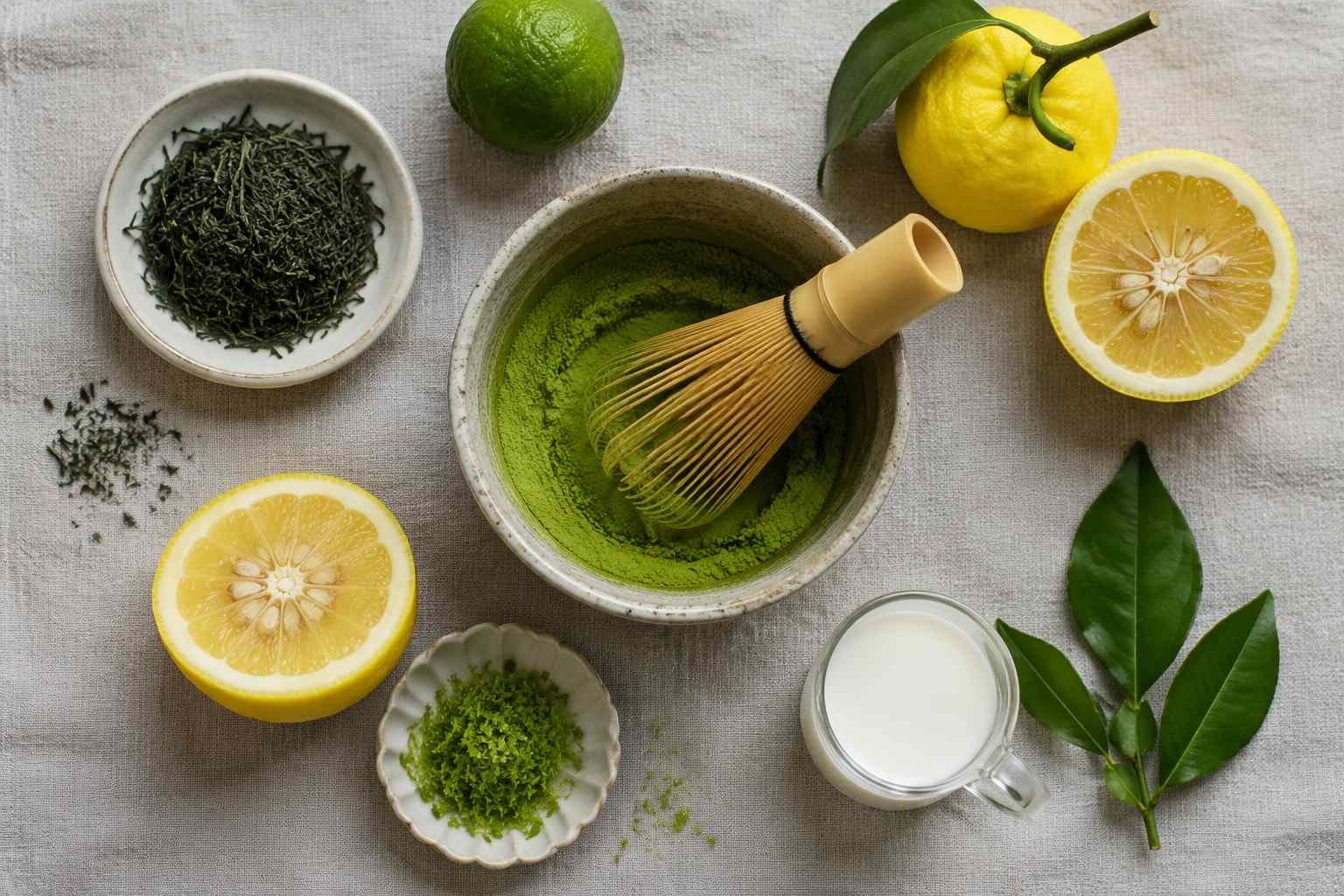
For most commercial food and beverage applications targeting mainstream consumer audiences, lemon and yuzu represent the optimal citrus-matcha pairing choices — lemon for its universal familiarity and bright refreshing profile, yuzu for its premium positioning and authentic Japanese flavor heritage alignment.

Matcha Citrus Ingredients
The health-ingredient associations of matcha — built on its EGCG antioxidant profile, L-theanine content, and natural caffeine — make it a natural fit for the functional beverage category. Our detailed analysis of natural flavor sources for better-for-you energy drinks covers complementary formulation strategies for health-positioned beverages that are directly applicable to citrus-matcha functional drink development.
The greatest technical challenge in citrus-matcha product development is managing EGCG oxidation — a reaction that turns vibrant green matcha brown and generates off-flavors that undermine product quality. Citrus environments present contradictory effects on EGCG stability:
Recommended antioxidant strategies for green color preservation in citrus-matcha beverages:
The matcha-cream pairing operates through entirely different mechanisms than the matcha-citrus interaction. Where citrus contrasts and sharpens matcha, cream softens and integrates it. The key mechanisms:
Different dairy and cream formats create distinct matcha flavor experiences:
| Format | Fat Content | Protein | Effect on Matcha | Best Applications |
| Heavy whipping cream (≥36% fat) | 36–40% | 2–3% | Maximum bitterness suppression; luxurious texture | Matcha ice cream, matcha ganache, matcha mousse |
| Half-and-half (10–18% fat) | 10–18% | 3–4% | Moderate bitterness reduction; lighter body | Matcha lattes, matcha RTD coffee |
| Whole milk (3.5% fat) | 3.5% | 3.3% | Mild softening; relatively light body | Matcha milk drinks, matcha yogurt beverages |
| Condensed milk | 8–9% fat + 45% sugar | 7% | Strong sweetness integration; rich body | Matcha boba, matcha dessert drinks |
| Cream cheese (33% fat) | 33% | 6% | Dense, tangy; cream-cheese tartness interacts with matcha | Matcha cream cheese frosting, matcha cheesecake |
| Oat milk (1.5% fat) | 1.5% | 1% | Minimal bitterness suppression; clean background | Vegan matcha latte, plant-based matcha drinks |
| Coconut cream (24% fat) | 24% | <1% | Tropical fat note; moderate bitterness suppression | Thai-style matcha, matcha tropical beverages |
The rapid growth of plant-based dairy has created a parallel track for matcha-cream product development. Oat milk, almond milk, coconut milk, and pea protein milk each present distinct flavor interaction profiles with matcha:

Matcha Compound Analysis Lab
When matcha, citrus, and cream are combined in a single product, the flavor interactions become multidirectional and require careful compositional balance:
Citrus-cream interaction: citrus acidity destabilizes dairy proteins if the pH drops below approximately 4.6 (the casein isoelectric point), causing protein aggregation and product instability. In matcha-citrus-cream products, this requires either (a) maintaining final product pH above 4.8 through buffered acid systems, (b) using heat-denatured milk proteins or processed cheese-type bases that resist acid precipitation, or (c) using non-dairy cream alternatives with better acid stability (coconut cream, oat cream, or cream-type flavor systems without live protein).
Matcha-cream-citrus balance: the fat from cream suppresses bitterness; citrus acid further reduces bitterness perception; the combined effect can result in matcha character being perceived as too mild or flat in the triple combination. Dosage compensation — using 30–50% more matcha powder or matcha flavor concentrate versus a standalone matcha formulation — is typically required to maintain identifiable matcha character in the three-component system.
The matcha-citrus-cream concept has found commercial success in several distinct product formats, each with specific formulation requirements:
Selecting the appropriate flavor format — water-soluble or oil-soluble — is a critical decision in formulating matcha-citrus-cream products, as both the citrus flavor compounds and cream-type flavor systems are available in multiple solubility formats with different dispersion and stability implications. Our technical guide on water soluble vs. oil soluble flavors for beverages provides the foundational guidance needed to make this decision correctly for each specific matcha application format.
Not all matcha is suitable for all applications. The flavor industry distinguishes between several quality tiers of matcha, each with distinct flavor characteristics and appropriate application ranges:
| Grade | Cultivation | Color | Flavor Character | Best Use | Typical Price Range |
| Ceremonial Grade | Shade-grown, first flush tencha | Vivid emerald green | Sweet, umami-forward, minimal bitterness; complex floral notes | Standalone beverages, premium confectionery | High (USD 30–80+/100g) |
| Premium Grade | Shade-grown, second flush | Bright green | Balanced bitterness-sweetness; good complexity | Matcha lattes, premium food applications | Medium-high (USD 15–35/100g) |
| Culinary Grade A | Shade-grown, third flush or blend | Medium green | Moderate bitterness; adequate sweetness; less complex | Baked goods, flavored beverages, ice cream | Medium (USD 5–15/100g) |
| Culinary Grade B/Industrial | Partial shade or blended | Yellow-green | More pronounced bitterness; robust; less delicate | Industrial flavoring, cooking applications | Low (USD 2–8/100g) |
For citrus-matcha pairings where citrus acidity is present to suppress bitterness, culinary grade A matcha often provides the best value — the bitterness that would be unpleasant in a standalone application is moderated by the citrus environment, while the cost savings versus ceremonial grade are significant. For cream-matcha applications where the matcha flavor is the star, premium or ceremonial grade delivers the complexity and sweetness that makes the pairing genuinely premium.
Food and beverage manufacturers can source matcha character either as whole matcha powder or as matcha flavor concentrates. Each format has distinct advantages:
Matcha used as a food ingredient is regulated as a conventional food ingredient in most major markets. In the United States, matcha (ground tencha green tea) is classified as GRAS when used as a conventional food ingredient, with no specific FDA approval requirement. Natural matcha flavor concentrates derived from green tea are covered under FDA 21 CFR 101.22 as ‘natural flavor’ when the flavoring is derived from the tea plant (Camellia sinensis).
According to the U.S. FDA’s guidance on dietary supplements and conventional foods, EGCG-containing green tea extracts used at high doses in dietary supplement contexts require careful safety evaluation — however, matcha used at standard culinary and beverage usage rates (providing EGCG levels equivalent to 1–5 cups of green tea) is well within conventional food use parameters and does not trigger dietary supplement regulatory requirements.
Citrus flavor compounds used in matcha-citrus applications are broadly covered under FEMA GRAS designations and EU Regulation (EC) 1334/2008. Key regulatory considerations for citrus compounds in matcha applications include:
Matcha’s natural caffeine content requires attention in certain regulatory contexts. Products making caffeine-related claims or targeting demographics with caffeine sensitivity (pregnant women, children) must include appropriate labeling. A standard matcha beverage (0.5–1.0% matcha powder in 250ml) contains approximately 35–70mg of caffeine — comparable to a standard espresso shot. Products in the EU containing caffeine above 150mg/L must carry the warning: ‘High caffeine content. Not recommended for children or pregnant or breast-feeding women.’
Guangdong Unique Flavor Co., Ltd. (Cuiguai Flavor) manufactures a specialized range of matcha flavor systems engineered for the full spectrum of matcha-citrus and matcha-cream applications. Our matcha flavor portfolio includes:
For manufacturers developing matcha-citrus beverage products, our Lemon Tea Flavor provides a precisely calibrated citrus-tea flavor profile that integrates naturally with matcha systems, delivering bright lemon character that complements rather than overwhelms matcha’s delicate vegetal-sweet notes.
Beyond citrus pairings, matcha’s flavor also develops exciting synergies with berry notes. Our Fresh Strawberry Flavor has demonstrated excellent compatibility with matcha formulations in beverages and confectionery — the bright, slightly acidic strawberry character interacts with matcha similarly to citrus, suppressing bitterness while adding fruity dimension to the profile.
Our food scientists and application specialists provide dedicated technical support for matcha innovation projects:

Matcha Flavor Manufacturing
Yuzu is widely considered the ideal citrus pairing for matcha in premium applications — its floral, complex citrus character aligns perfectly with matcha’s Japanese heritage, and it shares terpene compounds (linalool, limonene) with matcha’s own volatile profile. For mainstream commercial products targeting broad consumer audiences, lemon offers the advantage of universal familiarity and bright, refreshing impact. Bergamot is excellent for sophisticated or tea-heritage-aligned positioning. The ‘best’ citrus ultimately depends on target market, product positioning, and the specific sensory experience sought.
Matcha browning in citrus beverage applications results primarily from EGCG oxidation, catalyzed by dissolved oxygen, trace metal ions (iron, copper), and light exposure. While low pH from citrus acidity provides some protection, it cannot fully prevent oxidation in oxygen-containing systems. Effective prevention requires nitrogen gas sparging to remove dissolved oxygen before filling, use of deionized or RO water to minimize catalytic metal ions, antioxidant addition (ascorbic acid at controlled levels, or rosemary extract), UV-protective packaging, and cold-chain storage. Hot fill with immediate cooling and nitrogen headspace flush is the most practical solution for shelf-stable applications.
Cream reduces matcha bitterness through three mechanisms: (1) fat physically coats oral taste receptors, reducing the direct contact between EGCG molecules and bitter taste receptor cells; (2) milk proteins (casein, β-lactoglobulin) form non-covalent complexes with EGCG catechins, sequestering them from bitter receptor activation; and (3) the fat and protein matrix slows the release of volatile compounds including caffeine-related aromatics, creating a more gradual and harmonious flavor delivery that is perceived as less bitter overall. Higher fat content cream provides greater bitterness suppression than lower-fat dairy formats.
Yes, but it requires pH management. Dairy proteins precipitate near the casein isoelectric point (pH 4.6). In matcha-citrus-cream products, maintain final product pH above 4.8 to prevent protein aggregation. Practical approaches include: using UHT-processed or heat-denatured cream (more stable to pH variation), limiting citrus acid addition to achieve target flavor without excessive pH drop, using buffered acidulant systems (citric acid with sodium citrate), or substituting dairy cream with plant-based alternatives (oat cream, coconut cream) that are inherently acid-stable. Alternatively, use matcha-cream and matcha-citrus as separate components in layered products.
For matcha beverages where citrus or cream is present to moderate bitterness, culinary grade A matcha provides excellent value — its stronger flavor and lower cost are appropriate when the matcha character is supported by other flavor modifiers. For premium matcha lattes or standalone matcha beverages where matcha quality is the hero, ceremonial or premium grade delivers the sweetness, complexity, and vivid color that consumers expect at premium price points. For baked goods and confectionery with strong competing flavors, culinary grade B is often sufficient. Always specify vibrant green color (CIE L* ≥ 50, a* ≤ –15) in matcha powder specifications to ensure visual appeal.
For a matcha-citrus RTD beverage targeting light to moderate matcha intensity: 0.3–0.5% matcha powder (1.05–1.75g per 350ml) provides noticeable matcha character without overwhelming the citrus pairing. For matcha-forward positioning: 0.5–1.0% (1.75–3.5g per 350ml). For matcha flavor concentrate, equivalent dosages are typically 0.05–0.15% of finished beverage weight. Note that matcha powder dosage will require adjustment based on grade — more bitter culinary grade requires lower dosage than sweeter ceremonial grade for equivalent bitterness perception.
Achieving matcha-citrus balance requires calibrating three variables: matcha intensity, citrus acid level, and sweetness. Start with the citrus acid level targeting pH 3.8–4.2 for a refreshing soda, or 4.5–5.0 for a milder beverage. At that pH, calibrate matcha to be clearly perceptible — typically requiring 20–40% more matcha than in a standalone application due to bitterness suppression. Finally, sweetness should be set to balance total bitterness+acidity — Brix-to-acid ratio of 12–16 typically works for citrus-matcha beverages. Iterative sensory panel evaluation at each stage is essential; benchmarking against a target commercial product (e.g., a popular matcha lemonade) accelerates calibration.
Yes. Natural matcha flavor derived from Camellia sinensis (tea plant) is classified as a natural flavor under FDA 21 CFR 101.22 and is GRAS for food use. Matcha powder used as a food ingredient is also GRAS at culinary use levels. Matcha flavor concentrate producers should maintain GRAS self-affirmation documentation covering their specific production process and formulation. Individual flavor compounds within the matcha flavor system (linalool, geraniol, pyrazines) are typically listed as GRAS in the FEMA database — suppliers should be able to provide FEMA GRAS reference numbers for all significant flavor-active compounds.
Matcha’s versatility as a flavor platform — and its compatibility with both the brightness of citrus and the richness of cream — places it at the intersection of the most powerful consumer trends in modern food and beverage product development: health-functional positioning, premium sensory experiences, and global-heritage ingredient authenticity.
The chemistry underlying these pairings is not accidental. Matcha and citrus share aromatic compound families that create natural flavor bridges; cream and protein physically and chemically moderate matcha’s bitter compounds to create indulgent harmony. Understanding and leveraging these chemical interactions — through careful citrus variety selection, appropriate dairy format choice, EGCG oxidation management, and pH calibration — transforms matcha innovation from guesswork into precision craft.
Guangdong Unique Flavor Co., Ltd. brings the flavor chemistry expertise, the application science capability, and the sourcing infrastructure to support matcha innovation projects of any scale — from early-stage R&D flavor sampling to full-scale commercial flavor supply. We invite food and beverage product developers to engage with our team to explore what matcha-citrus and matcha-cream flavor systems can do for your product portfolio.
Ready to explore matcha-citrus, matcha-cream, or tri-component flavor innovation for your next product? Our flavor scientists welcome technical inquiries and are happy to provide complimentary samples from our matcha flavor portfolio for application trials.
📞 Phone / WhatsApp / Telegram: +86 189 2926 7983
🌐 Website: https://www.cuiguai.cn
📧 Email: info@cuiguai.com
💬 WhatsApp & Telegram: +86 189 2926 7983
[1] U.S. Food and Drug Administration. (2024). 21 CFR 101.22 — Foods; Labeling of Spices, Flavorings, Colorings, and Chemical Preservatives. https://www.ecfr.gov/current/title-21/chapter-I/subchapter-B/part-101/section-101.22
[2] U.S. Food and Drug Administration. (2012). Guidance for Industry: Dietary Supplements — A Framework for Evaluating Safety. https://www.fda.gov/food/dietary-supplements-guidance-documents-regulatory-information
[3] European Commission. (2008). Regulation (EC) No 1334/2008 on flavourings and certain food ingredients with flavouring properties. https://eur-lex.europa.eu/legal-content/EN/TXT/?uri=CELEX:32008R1334
[4] Kochman, J., Jakubczyk, K., Antoniewicz, J., Mruk, H., & Janda, K. (2021). Health benefits and chemical composition of matcha green tea: A review. Molecules, 26(1), 85. https://doi.org/10.3390/molecules26010085
[5] Flavor and Extract Manufacturers Association (FEMA). (2024). GRAS Flavoring Substances Database. Washington, D.C.: FEMA. https://www.femaflavor.org/gras
[6] Chacko, S. M., Thambi, P. T., Kuttan, R., & Nishigaki, I. (2010). Beneficial effects of green tea: a literature review. Chinese Medicine, 5, 13. https://doi.org/10.1186/1749-8546-5-13
[7] Scharbert, S., Holzmann, N., & Hofmann, T. (2004). Identification of the astringent taste compounds in black tea infusions by combining instrumental analysis and human bioresponse after single compound reconstitution. Journal of Agricultural and Food Chemistry, 52(11), 3498–3508.
[8] Schäfer, A., Chovanová, Z., Muchová, J., Sumegová, K., Liptáková, A., Ďuračková, Z., & Högger, P. (2006). Inhibition of COX-1 and COX-2 activity by plasma of human volunteers after ingestion of French maritime pine bark extract (Pycnogenol). Biomedicine & Pharmacotherapy, 60(1), 5–9.
Copyright © 2025 Guangdong Unique Flavor Co., Ltd. All Rights Reserved. Return and Exchange Policy