المؤلف: فريق البحث والتطوير، نكهة كويغوينُشرت بواسطة: شركة قوانغدونغ فريد النكهات المحدودةآخر تحديث: 21 يونيو 2026واتساب وتيليجرام: +86 189 2926 7983
تصور مختبر أبحاث وتطوير المشروبات
مقدمة: تطور المشروبات الكربونية القوية وتحدي المحتوى العالي للكحول
شهد سوق المشروبات الكحولية الجاهزة للشرب (RTD) تحولاً جذريًا خلال العقد الماضي. في البداية، كانت تهيمن عليها مشروبات الشعير والمبردات السكرية، لكن ثورة حدثت مع ظهور السيلتزر القوي. يتميز بطاقاته النقية والنظيفة، وقلة السعرات الحرارية، وانتعاشه بالفوار، وسرعان ما أصبح السيلتزر جزءًا أساسيًا للمستهلكين المهتمين بالصحة والباحثين عن بديل أخف للبيرة أو المشروبات المختلطة التقليدية. في المراحل الأولى من هذا الانتشار، كانت نسبة الكحول بالمللي (ABV) تتراوح حول 4% إلى 5% بشكل معتدل. سمح هذا التكوين الكحولي المنخفض بعمليات نكهة نسبياً مباشرة. كانت النكهات الذائبة في الماء، التي تتكون أساسًا من إسترات الفاكهة والمستخلصات النباتية البسيطة، تؤدي أداءً جيدًا ضمن هذا الوسط الإيثانولي المخفف. الكيمياء الفيزيائية لمحلول بنسبة 4% ABV تحاكي عن كثب تلك الخاصة بالماء النقي، مما يعني أن معاملات توزيع النكهة ظلت مستقرة إلى حد كبير، وأن ملفات الحسية كانت مطابقة للنماذج المختبرية الأصلية بدقة عالية.However, as the market has matured, consumer preferences have rapidly evolved. Driven by a desire for more robust drinking experiences and a higher 'value-to-alcohol' ratio, the market is currently witnessing a massive pivot toward 'imperial' or high-ABV hard seltzers. Today, it is increasingly common to see formulations pushing 8%, 10%, or even 12% ABV. While this meets consumer demand, it introduces a labyrinth of profound technical challenges for beverage formulators and flavor chemists. The most notorious of these challenges is 'Flavor Fading'—a phenomenon where a beverage tastes spectacular immediately after production but loses its aromatic intensity, structural complexity, and overall sensory impact within a matter of weeks on the shelf. This fading is not merely a perceptual illusion; it is the result of rigorous, uncompromising physical and chemical dynamics acting upon the delicate organic molecules that constitute a flavor profile.تدهور النكهة في قواعد الكحول العالي يمثل خطرًا اقتصاديًا وسمعة حاسماً للمصنعين. فالمنتج الذي يُطرح في السوق بنكهة خافتة، مشوهة، أو متدهورة تمامًا، سيتعرض حتمًا لضعف معدلات إعادة الشراء وتدهور العلامة التجارية. يتطلب التغلب على هذه العقبة تخطي الأساليب التأسيسية في التركيب، واعتماد نهج صارم من الأعلى إلى الأسفل يستند إلى الكيمياء الفيزيائية المتقدمة، وعلوم البوليمرات، وأنظمة التوصيل الحديثة. سيركز هذا الدليل الفني الشامل، الذي يقدمه فريق هندسة النكهات الخبير لدينا، على تفكيك الآليات الديناميكية الحرارية لتدهور النكهة في مصفوفات الإيثانول العالية، واستكشاف مسارات التحلل الكيميائي، وتقديم استراتيجيات عملية ومثبتة علميًا لتصميم نكهات قوية ومستقرة على الرف للجيل القادم من مشروبات السلتزر ذات الكحول العالي.
الكيمياء الفيزيائية لمصفوفة المشروب: تفاعلات الإيثانول والماء
To truly understand why flavor fading occurs with such aggressive rapidity in high-ABV systems, one must first deconstruct the physical chemistry of the solvent matrix itself. A hard seltzer is primarily a binary solvent system composed of water and ethanol, infused with carbon dioxide, organic acids, and trace flavor molecules. Water is a highly polar solvent, forming a tight, structured network of hydrogen bonds. Ethanol, on the other hand, is an amphiphilic molecule; it possesses a polar hydroxyl group (-OH) capable of hydrogen bonding, and a non-polar ethyl group (-CH2CH3) that interacts favorably with hydrophobic compounds. In low-ABV seltzers (4-5%), the solvent matrix is overwhelmingly aqueous. Hydrophobic flavor molecules—such as the terpenes found in citrus oils—are inherently unstable in this aqueous environment. Because they are energetically 'uncomfortable' in water, these volatile organic compounds (VOCs) are readily expelled from the liquid phase into the gaseous headspace of the beverage can. This high air-water partition coefficient (Kaw) is precisely what gives low-ABV seltzers their explosive, aromatic 'pop' when the can is cracked open.As the ABV increases to 8% or 12%, the thermodynamic landscape of the beverage fundamentally transforms. The introduction of higher concentrations of ethanol significantly lowers the overall dielectric constant and polarity of the solvent matrix. Ethanol acts as a powerful co-solvent, disrupting the structured hydrogen-bonding network of water and creating hydrophobic 'pockets' within the liquid. For lipophilic (fat-loving) flavor molecules, this new environment is highly favorable. Instead of being violently expelled into the headspace, these molecules become comfortably solvated within the ethanol-rich matrix. Consequently, the partition coefficient shifts from an air-water dynamic to an air-ethanol dynamic (Kae). The vapor pressure of the flavor molecules drops precipitously. This thermodynamic suppression is a primary driver of perceptual flavor fading. The flavor hasn't necessarily disappeared; rather, it is trapped in the liquid phase, unable to aerosolize and reach the consumer's olfactory receptors. The beverage tastes 'flat' or 'muted' because the aromatic release has been chemically throttled by the increased ethanol concentration.علاوة على ذلك، فإن التركيزات العالية للكحول الإيثيلي تغير من الخصائص الراجعية وتوتر السطح للمشروب، مما يؤثر على تكوين الفقاعات و dynamics إطلاق ثاني أكسيد الكربون. عندما تصعد فقاعات ثاني أكسيد الكربون إلى سطح المشروب الكربوني، فإنها تعمل كحاملات مادية، تزيل الروائح المتطايرة من السائل وتطلقها في مساحة الرأس. التغيرات في توتر السطح الناتجة عن ارتفاع مستويات الكحول يمكن أن تغير حجم وتكرار هذه الفقاعات، مما يغير معدل انتقال الكتلة لجزيئات النكهة. فهم هذه التفاعلات الديناميكية الحرارية المعقدة هو الخطوة الأساسية في تصميم نكهات مقاومة لتأثيرات التضاؤل الناتجة عن مصفوفة عالية التركيز الكحولي.
التركيب الجزيئي لقطيرة المستحلب
الآليات الأساسية وراء التحلل الكيميائي في المشروبات الكحولية العالية
بالإضافة إلى القمع الفيزيائي للتطاير، فإن المصفوفات عالية الكحول تدمّر جزيئات النكهة بنشاط من خلال مسارات تحلل كيميائية عدوانية. عادةً، يُصنع السلتزر القاسي بدرجة حموضة منخفضة (عادة بين 3.0 و3.5) باستخدام أحماض عضوية مثل حمض الستريك أو الماليك. هذا البيئة الحمضية ضرورية للحفاظ على استقرار الميكروبات وتوفير حموضة منعشة. ومع ذلك، فإن الجمع بين تركيز عالٍ من الإيثانول وتوافر عالي للبروتونات (H+) يخلق بيئة كيميائية نشطة جدًا. الآليات الرئيسية للتحلل تشمل التحلل المائي المحفز بالحمض، والأكسدة، والتحول إلى استرات.
أ. التحلل المائي المحفز بالحمض والتحول إلى استرات
Esters are a fundamental class of flavor compounds, responsible for the vast majority of fruity, sweet, and floral notes in beverages. For example, isoamyl acetate provides a characteristic banana/pear note, while ethyl butyrate imparts a juicy pineapple aroma. In an acidic aqueous environment, esters undergo acid-catalyzed hydrolysis, breaking down into their constituent alcohols and carboxylic acids. This reaction is entirely reversible and reaches an equilibrium state. However, in a high-ABV seltzer, the massive abundance of ethanol completely alters the equilibrium dynamics. Through a process known as transesterification, the ethanol molecules actively substitute the original alcohol group of the ester. This leads to the formation of entirely new ethyl esters, completely mutating the intended flavor profile. Over a period of 4 to 8 weeks, a crisp, specific berry flavor might degrade into a generic, muddy, 'candied' profile as the original complex esters are systematically replaced by simple ethyl esters. Research published in the Journal of Agricultural and Food Chemistry highlights that the rate of ester hydrolysis and transesterification increases logarithmically as the ABV rises past the 6% threshold, making high-ABV formulations exceptionally vulnerable.
ب. التحلل التأكسدي للتربينات
Citrus flavors (lemon, lime, grapefruit, orange) are arguably the most popular profiles in the hard seltzer category. The backbone of these flavors relies on terpenes, specifically d-limonene, pinene, and gamma-terpinene. Terpenes are highly unsaturated hydrocarbons, meaning they contain multiple double bonds. These double bonds are electronically dense and highly susceptible to oxidative attack. Even trace amounts of dissolved oxygen in the beverage, combined with the catalytic effects of light or trace transition metals (like copper or iron from the water supply), can initiate a radical chain reaction. In a high-ethanol environment, the solubility of oxygen is slightly altered, and the matrix can sometimes stabilize the oxidative intermediates, leading to rapid degradation. Limonene, for instance, oxidizes into alpha-terpineol, carvone, and carveol. Sensory-wise, this transformation is disastrous. The bright, zesty, freshly peeled citrus note degrades into a heavy, stale, 'piney', or even solvent-like off-note. Controlling oxidation in high-ABV matrices requires stringent dissolved oxygen management during production and the use of specialized, oxidatively stable flavor extracts.
ج. تكوين الأستال
الدهيدات، التي توفر النغمات العليا الحيوية (مثل نغمة التفاحة الخضراء من الهيكسال أو نغمة الكرز من البنزالديهايد)، تكون نشطة جدًا في وجود الكحول. في مشروب كربوني عالي الكحول، تتفاعل الدهيدات مع الإيثانول لتكوين الهيماستال، ثم تتحول إلى استرات مستقرة. هذا التفاعل يزيل النغمات الحادة والحدة من النكهة، ويترك المشروب بلا طابع حيوي وبتأثير أولي ضعيف. فقدان الدهيدات كيميائيًا هو آلية خفية لذبول النكهة غالبًا لا يُلاحظ إلا في اختبارات عمر التخزين المتأخرة.
سرقة النكهات: اللص الصامت في صناعة التعبئة والتغليف
Even if a formulator successfully designs a flavor system that is chemically and thermodynamically stable within the liquid matrix, the flavor can still be lost to the packaging itself—a phenomenon known as 'flavor scalping'. Hard seltzers are overwhelmingly packaged in aluminum cans. Bare aluminum is highly reactive with acidic beverages, so the interior of the can must be coated with a protective polymeric liner. Historically, these liners were made of epoxy resins containing Bisphenol A (BPA). Due to health concerns, the industry has shifted to BPANI (BPA Non-Intent) liners, primarily utilizing acrylic or modified polyester polymers. While these modern liners are safer, they are highly oleophilic (oil-loving).Flavor scalping occurs when hydrophobic flavor molecules migrate out of the liquid beverage and absorb into the polymeric matrix of the can liner. According to findings published by the American Chemical Society (ACS), the rate and extent of flavor scalping are governed by the partition coefficient between the beverage and the polymer, as well as the diffusion coefficient of the flavor molecules within the polymer. High-ABV seltzers exacerbate this problem drastically. Ethanol acts as a plasticizer for the polymeric liner. It penetrates the polymer matrix, increasing the 'free volume' between the polymer chains. This swelling of the liner effectively opens the floodgates, allowing larger, more complex hydrophobic flavor molecules to easily diffuse into and become trapped within the plastic lining. Citrus terpenes, due to their highly non-polar nature, are the most frequent victims of scalping. In an 8% ABV seltzer packaged in a standard BPANI lined can, up to 60% of the limonene content can be scalped within the first 30 days of storage. The result is a total collapse of the flavor profile. Combating flavor scalping requires a multi-pronged approach: selecting liner materials with lower sorption capacities, optimizing the ABV-to-liner interaction, and utilizing advanced flavor encapsulation technologies.
مخطط عملية استنزاف النكهة
تصميم أنظمة مقاومة: صياغة استراتيجية واختيار الجزيئات
Addressing the multifaceted challenges of flavor fading requires formulators to abandon 'off-the-shelf' solutions and engage in rigorous, customized molecular engineering. The first strategic pillar is intelligent molecule selection. A flavor profile is composed of top notes (highly volatile, immediate impact), middle notes (the core character), and base notes (heavy, lingering molecules). In a high-ABV matrix, top notes are thermodynamically suppressed by ethanol and chemically vulnerable to acetal formation or transesterification.To build a resilient profile, flavor chemists must selectively substitute vulnerable molecules with highly stable analogs. For example, instead of relying heavily on unstable acetates (like isoamyl acetate) for a tropical profile, chemists will utilize heavier, more complex lactones and stable aldehydes that resist acid-catalyzed hydrolysis. By carefully curating the molecular building blocks, the structural integrity of the flavor can be maintained even under extreme chemical stress. Furthermore, because ethanol suppresses volatility, the overall dosage and concentration of base notes must be significantly fortified to punch through the heavy solvent matrix. This 'bottom-heavy' formulation approach ensures that even if some top notes are lost to degradation or scalping, a robust, identifiable flavor core remains intact throughout the shelf life.بالنسبة للصناع الذين يسعون لتحقيق أقصى قدر من الصمود، فإن استثمارهم في مكونات متخصصة ومُجهَّزة مسبقًا يُعدُّ أمرًا بالغ الأهمية. For instance, utilizing high-quality Natural Citrus Flavor Extractsالتي تم طيها وانتقاؤها بعناية لإزالة التربينات غير المستقرة وتركيز المركبات المؤكسدة المستقرة يمكن أن يقلل بشكل كبير من معدل التحلل التأكسدي. من خلال إزالة الروابط الضعيفة في السلسلة الكيميائية، يصبح نظام النكهة بأكمله أكثر استقرارًا بشكل أسي.
أنظمة توصيل متقدمة: المستحلبات والتغليف الدقيق
على الرغم من أن الاستبدال الجزيئي فعال للغاية، إلا أنه لا يمكنه حل المشكلات الفيزيائية المتعلقة بكبت التقلب ونهب النكهة بشكل كامل. لحماية زيوت النكهة الحساسة من المذيب الإيثانولي العدواني وطبقة العزل الدهنية للعلبة، يجب استخدام أنظمة توصيل متقدمة. وتتوج هذه التقنية في قطاع المشروبات باستخدام النانومستحلبات والتقنيات الدقيقة للتغليف الدقيق.في مستخلص النكهة السائلة التقليدية، تُذاب جزيئات النكهة ببساطة في مذيب حاملي (مثل بروبيلين غليكول أو الإيثانول) وتُخلط في المشروب. أما في نظام المستحلب، تُقصُّ زيوت النكهة الكارهة للماء ميكانيكيًا إلى قطرات دقيقة (غالبًا دون الميكرون في الحجم) وتُغطى بطبقة واقية من المستحلبات أو المواد الفاعلة سطحياً. تشكل هذه الحاجز الفيزيائي عازلًا يحمي مركبات النكهة من البيئة العدائية الحمضية عالية الإيثانول في السائل الكلي. فهي تحمي الإسترات من التحلل المائي، وتوفر حماية للترپنات من التأكسد، والأهم من ذلك، تمنع جزيئات النكهة من التفاعل مع بطانة العلبة وامتصاصها، مما يوقف نهب النكهة على الفور.Creating stable emulsions for high-ABV seltzers is incredibly complex. Standard emulsifiers often fail in the presence of high ethanol, leading to 'ringing' (oil separating and floating to the neck of the bottle) or flocculation (droplets clumping together). To overcome this, formulators utilize advanced weighting agents (like Sucrose Acetate Isobutyrate - SAIB, or ester gum) to balance the specific gravity of the oil phase with the aqueous phase, preventing separation governed by Stokes' Law. Furthermore, highly robust, sterically stabilizing surfactants, such as modified food starches (OSA starch) or specialized quillaja saponins, are employed to maintain droplet integrity even at 10% or 12% ABV. Our comprehensive technical exploration on Microencapsulation in Food Science يقدم غوصًا عميقًا في ديناميات السوائل وال kinetics لهذه الأنظمة.By integrating our Advanced Beverage Emulsions,يمكن للمصنعين تحقيق استقرار غير مسبوق في مدة الصلاحية. هذه المستحلبات مصممة بدقة لتحمل الصدمات الديناميكية الحرارية في بيئات عالية الإيثانول، مما يضمن بقاء الملف النكهي حيويًا، مكثفًا، وصادقًا للطابع من يوم التعبئة حتى نهاية مدة الصلاحية المقصودة.
Flavor is not experienced in a vacuum; it is perceived in concert with taste (sweet, sour, salty, bitter) and mouthfeel (astringency, carbonation bite, ethanol burn). In a high-ABV seltzer, modulating the overall beverage matrix is just as critical as protecting the flavor molecules themselves. The intense 'burn' or harshness of high ethanol concentrations can easily overwhelm delicate fruit or botanical notes, exacerbating the perception of flavor fading. Effective matrix modulation involves the strategic use of organic acids, specialized sweeteners, and precise carbonation controls.Organic acids do more than just lower pH; they fundamentally alter how flavors are perceived on the palate. Guidelines established by the Flavor and Extract Manufacturers Association (FEMA) emphasize the synergistic relationship between specific acids and specific flavor profiles. Citric acid, with its sharp, immediate 'bite', is ideal for lifting and enhancing citrus profiles like lemon and lime. Malic acid, which offers a smoother, more lingering tartness, pairs exceptionally well with berry, apple, and stone fruit profiles. Tartaric acid, inherently astringent, is often utilized in grape or wine-inspired seltzers. By matching the acid profile to the flavor system, formulators can enhance the perceived intensity of the flavor, masking the suppressive effects of the ethanol.To combat ethanol burn, formulators increasingly utilize advanced masking agents and high-intensity sweeteners, even in 'zero sugar' products. Minute, sub-threshold dosages of glycosylated steviol glycosides or specialized botanical modulators can bind to bitter receptors on the tongue, smoothing out the harsh alcoholic finish without adding perceived sweetness. This allows the core flavor profile to shine through unimpeded.أخيرًا، تلعب مستويات الفوران دورًا حاسمًا في توصيل النكهة من خلال التأثير الفيزيائي. حيث تحدد أحجام ثاني أكسيد الكربون (التي تتراوح عادةً بين 2.5 إلى 3.0 أحجام في المشروبات الغازية القوية) معدل إزالة المركبات الطيارة من السائل وتوصيلها إلى الجهاز الشمي. في مشروب سلتزر عالي الكحول حيث يتم قمع التقلبات بشكل طبيعي، يمكن لتحسين حجم فقاعات ثاني أكسيد الكربون ومعدل التكاثف أن يجبر بشكل مصطنع على إخراج العطور من المحلول، مما يخلق تأثيرًا عطريًا أوليًا أكثر كثافة. ولتحليل شامل لهذه التفاعلات، refer to our detailed publication on Beverage Flavor Stability Mechanisms .
المنهجيات التحليلية لتتبع والتحقق من الاستقرار
التذوق الذاتي غير كافٍ لضمان مدة صلاحية مشروب السيلتزر القوي المحتوى على نسبة عالية من الكحول. يتطلب تصنيع النكهات المهنية منهجيات تحليلية صارمة وموضوعية لقياس تلاشي النكهة، وتحديد مسارات التحلل، والتحقق من فاعلية أنظمة الحماية. المعيار الذهبي في تحليل النكهات هو التحليل بواسطة كروماتوغرافيا الغاز مع مطياف الكتلة (GC-MS). من خلال دمج GC-MS مع الاستخلاص الميكروعي بواسطة الطور الصلب (SPME)، يمكن للكيميائيين التحليليين أخذ عينات من الملف العطري الدقيق الموجود في مساحة الهواء فوق السائل داخل العلبة المغلقة دون تغيير التركيبة السائلة.تتضمن بروتوكولات اختبار الاستقرار القوية تعبئة النموذج الأولي للمشروب وخضع له لظروف الشيخوخة المعجلة—عادة يُخزن في درجات حرارة مرتفعة (مثلاً 35°C إلى 40°C) لمحاكاة شهور من عمر المنتج خلال أسابيع قليلة. يُستخدم جهاز SPME-GC-MS لمتابعة التركيز الدقيق للجزيئات المميزة الرئيسية (مثل الليمونين للحمضيات، أو الإيثيل بيوتريت للأناناس) مع مرور الوقت. إذا انخفض تركيز الليمونين بشكل حاد وارتفع تركيز الكارفون، فإن الفريق التحليلي يعلم على الفور أن التحلل التأكسدي يحدث. وإذا اختفت استرات معينة بدون نواتج أكسدة مقابلة، فإن السبب المحتمل هو التحلل الحمضي أو سرقة النكهات. تتيح هذه البيانات الموضوعية على مستوى الجزيئات للمصممين تعديل أنظمتهم بدقة جراحية.Furthermore, instrumental analysis must be paired with rigorous descriptive sensory analysis. Highly trained sensory panels utilize methodologies like Quantitative Descriptive Analysis (QDA) to map the organoleptic profile of the beverage on a multidimensional spider web graph. They evaluate parameters such as 'initial impact', 'fruit fidelity', 'ethanol burn', and 'off-note development'. By correlating the objective GC-MS data with the subjective human perception data from the sensory panel, manufacturers can confidently guarantee a product that not only survives the chemistry of the can but also delights the consumer upon consumption. As mandated by internal quality controls and referencing regulations from bodies like the Alcohol and Tobacco Tax and Trade Bureau (TTB), maintaining this dual-pronged analytical approach ensures total compliance, safety, and superior market performance.
الأسئلة الشائعة حول تركيبات النكهات ذات المحتوى العالي للكحول
ولتسهيل مهمة مطوري المشروبات في التنقل عبر هذا المشهد المعقد، قمنا بإعداد قسم أسئلة متكررة فني يتناول أهم المخاوف التي تواجههم أثناء صياغة المنتجات ذات المحتوى العالي من الكحول.Q1:ما هو النطاق الأمثل لدرجة الحموضة لتعزيز استقرار النكهة في سيلتزر عالي التركيز الكحولي بنسبة 8%؟A: The optimal pH is a delicate balancing act between microbial safety, sensory crispness, and chemical stability. Generally, a pH of 3.2 to 3.4 is targeted. Dropping the pH below 3.0 drastically accelerates acid-catalyzed hydrolysis of esters and can increase the astringency of the ethanol bite. Conversely, allowing the pH to rise above 3.6 can compromise microbial stability and result in a 'flabby' or flat sensory profile. Utilizing buffer systems, such as a combination of citric acid and sodium citrate, can help lock the pH at the optimal target, reducing fluctuations during shelf life.Q2: هل يمكن لضبط مستوى الكربنة أن يعوض تمامًا عن قمع تطاير النكهة الناتج عن الكحول العالي؟A: While increasing carbonation (e.g., pushing from 2.6 to 3.0 volumes of CO2) increases the kinetic stripping of volatiles into the headspace—thereby improving the initial aromatic burst—it is not a total cure. Excessive carbonation increases the 'carbonic bite' (the pain receptors triggered by carbonic acid on the tongue), which can overwhelm delicate flavors and exacerbate the harshness of the alcohol. Carbonation should be viewed as a delivery mechanism, not a replacement for chemically stable flavor formulation.Q3:هل جميع بطانات العلب عرضة بشكل متساوٍ لسرقة النكهات؟لا. تحدد الخصائص الفيزيائية لبطانة البوليمر إمكانية سرقة النكهات. بطانات الإيبوكسي التقليدية، رغم فعاليتها في منع التآكل، عرضة جدًا لسرقة التربينات الكارهة للماء. أما بطانات BPANI الحديثة المعتمدة على الأكريليك فتتمتع بمصفوفة بوليمر متشابكة بشكل أكثر إحكامًا، مما يقلل قليلاً من معدل انتشار جزيئات النكهة الكبيرة. ومع ذلك، في وجود مادة مذيبة قوية مثل 10% إيثانول، ستظهر تقريبًا جميع البطانات القياسية بعض درجات السرقة. لهذا السبب، فإن استخدام المستحلبات المغلفة هو الاستراتيجية الدفاعية الأكثر موثوقية.Q4: لماذا تظهر نكهات الحمضيات تتلاشى بشكل أسرع بكثير من نكهات الفانيليا أو البهارات في مشروبات السيلتزر القوية؟الأمر يعود إلى التركيب الكيميائي للجزيئات الأساسية للنكهة. نكهات الحمضيات تعتمد بشكل كبير على التربينات (الليمونين، البينين) والدهيدات الحساسة (السترال). التربينات شديدة الكارهة للماء (مما يؤدي إلى سرقة سريعة) وتحتوي على روابط مزدوجة متعددة (مما يعرضها للأكسدة السريعة). أما نكهات الفانيليا والتوابل، فهي تعتمد على مركبات فينولية ثقيلة ومستقرة (مثل الفانيلين أو الإيوجينول). هذه الجزيئات الثقيلة أقل تقلبًا، وأقل كراهة للماء، وأكثر متانة كيميائية، مما يمكنها من البقاء في مصفوفة عالية الكحول دون أن تتدهور أو تمتص إلى البطانة.
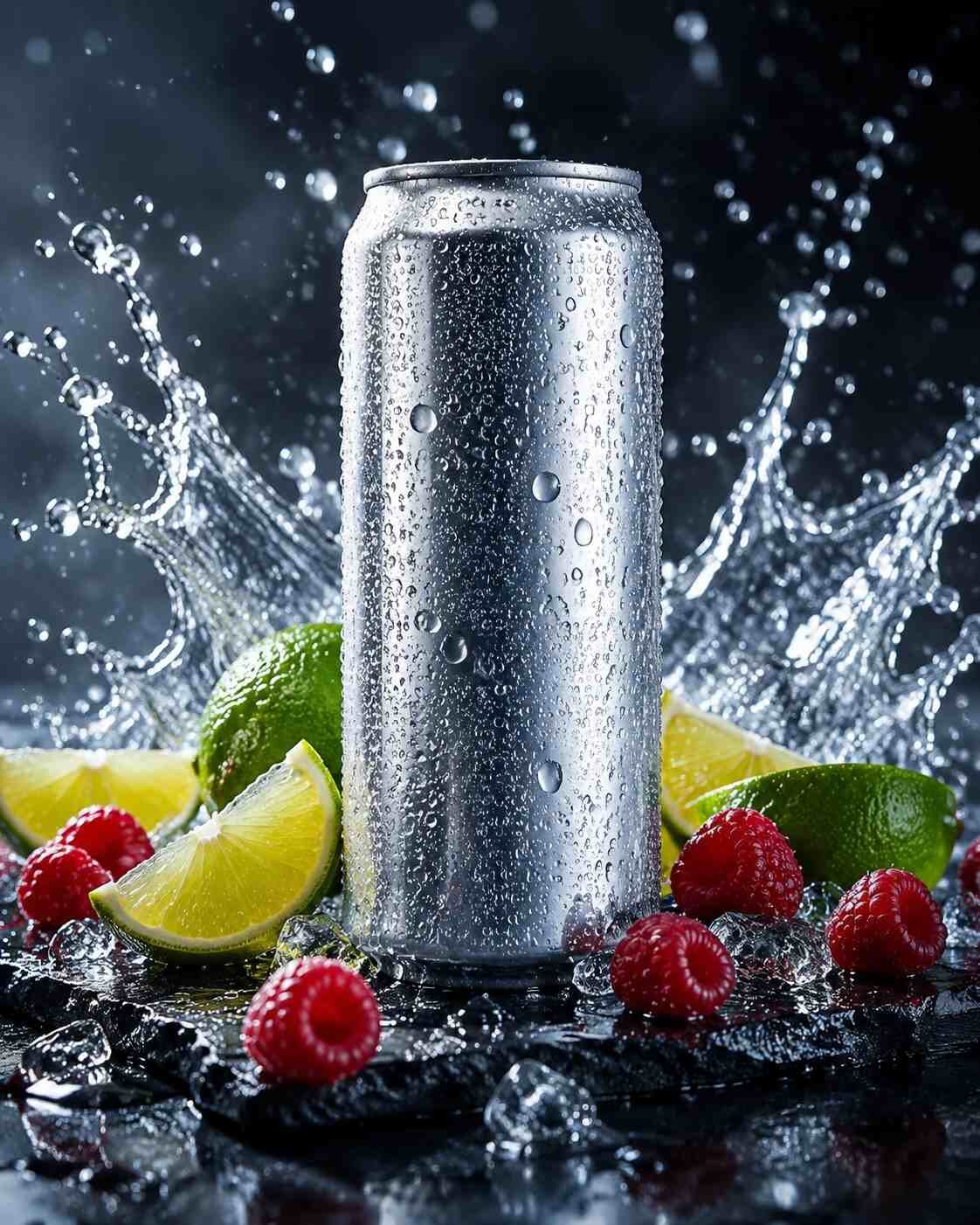
صورة منتج سيلتزر فاخرة عالية الجودة
الخاتمة: الشراكة من أجل ابتكار استراتيجي للمشروبات
Formulating a successful high-ABV hard seltzer is far more complex than simply scaling up the flavor dosage of a 4% recipe. It is an intricate physico-chemical puzzle that requires a deep understanding of thermodynamics, polymer interactions, and advanced chemical engineering. As consumer palettes become more sophisticated and the market grows increasingly saturated, the margin for error diminishes. A product that suffers from rapid flavor fading will not survive in today's competitive landscape.في منشأتنا المتطورة لصناعة النكهات، لا نوفر مجرد مكونات، بل نقدم حلولًا مهندسة بدقة وموثوقة علميًا. من استخدام وحدات بناء مطابقة للطبيعة مقاومة للتحول إلى استرات، إلى تطبيق أحدث تقنيات المستحلبات الدقيقة التي تتصدى لسرقة النكهات، فريق البحث والتطوير لدينا مجهز لمواجهة أصعب التحديات التقنية في صناعة المشروبات. ندعو مطوري المشروبات، ومالكي العلامات التجارية، ومهندسي الإنتاج للاستفادة من خبراتنا. معًا، يمكننا تطوير ملفات نكهات مقاومة، نابضة بالحياة، وذات ريادة سوقية تدوم عبر الزمن.
تبادل تقني وطلب عينات مجانية
هل أنت مستعد للتغلب على تلاشي النكهة في منتجاتك ذات المحتوى العالي من الكحول؟ تواصل مع فريق الهندسة الفنية لدينا اليوم لمناقشة تحديات تركيب الصيغة الخاصة بك، وطلب نماذج نكهة مخصصة، والحصول على عينات تقنية مجانية من مستحلبات المشروبات المتقدمة ومستخلصاتنا المستقرة.