过去十年中,预调酒市场经历了彻底的范式转变。起初由麦芽饮料和甜味凉饮主导的行业,被硬苏打水的出现所革新。其清新纯净的口感、低热量和令人振奋的碳酸感,使硬苏打水迅速成为追求健康生活方式消费者的首选,替代传统啤酒或混合饮料。在这一繁荣初期,酒精含量(ABV)大多维持在4%至5%的温和水平。这一低酒精基底使得风味调配相对简便。以水果香酯和植物提取物为主的水溶性风味,在这种稀释的乙醇环境中表现出色。4% ABV的溶液物理化学性质与纯水极为相似,风味的分配系数保持较为稳定,感官特性也与实验室原型高度一致。However, as the market has matured, consumer preferences have rapidly evolved. Driven by a desire for more robust drinking experiences and a higher 'value-to-alcohol' ratio, the market is currently witnessing a massive pivot toward 'imperial' or high-ABV hard seltzers. Today, it is increasingly common to see formulations pushing 8%, 10%, or even 12% ABV. While this meets consumer demand, it introduces a labyrinth of profound technical challenges for beverage formulators and flavor chemists. The most notorious of these challenges is 'Flavor Fading'—a phenomenon where a beverage tastes spectacular immediately after production but loses its aromatic intensity, structural complexity, and overall sensory impact within a matter of weeks on the shelf. This fading is not merely a perceptual illusion; it is the result of rigorous, uncompromising physical and chemical dynamics acting upon the delicate organic molecules that constitute a flavor profile.高酒精基底中的风味褪色,成为制造商面临的关键经济与声誉风险。若产品带着微弱、扭曲或完全退化的风味面市,必然导致回购率低迷与品牌稀释。突破这一难关,不能仅依赖粗略的配方技术,而需采用严谨的自上而下策略,依托先进的物理化学、聚合物科学与尖端递送系统。本由我们的专业风味工程团队倾力呈现的全面技术指南,将深入剖析高乙醇基底中风味褪色的热力学机制,探索化学降解途径,并提出科学验证的具体策略,以打造抗逆、稳定持久的风味轮廓,迎接高酒精度硬苏打水的崭新时代。
2. 饮料基质的物理化学:乙醇与水的相互作用
To truly understand why flavor fading occurs with such aggressive rapidity in high-ABV systems, one must first deconstruct the physical chemistry of the solvent matrix itself. A hard seltzer is primarily a binary solvent system composed of water and ethanol, infused with carbon dioxide, organic acids, and trace flavor molecules. Water is a highly polar solvent, forming a tight, structured network of hydrogen bonds. Ethanol, on the other hand, is an amphiphilic molecule; it possesses a polar hydroxyl group (-OH) capable of hydrogen bonding, and a non-polar ethyl group (-CH2CH3) that interacts favorably with hydrophobic compounds. In low-ABV seltzers (4-5%), the solvent matrix is overwhelmingly aqueous. Hydrophobic flavor molecules—such as the terpenes found in citrus oils—are inherently unstable in this aqueous environment. Because they are energetically 'uncomfortable' in water, these volatile organic compounds (VOCs) are readily expelled from the liquid phase into the gaseous headspace of the beverage can. This high air-water partition coefficient (Kaw) is precisely what gives low-ABV seltzers their explosive, aromatic 'pop' when the can is cracked open.As the ABV increases to 8% or 12%, the thermodynamic landscape of the beverage fundamentally transforms. The introduction of higher concentrations of ethanol significantly lowers the overall dielectric constant and polarity of the solvent matrix. Ethanol acts as a powerful co-solvent, disrupting the structured hydrogen-bonding network of water and creating hydrophobic 'pockets' within the liquid. For lipophilic (fat-loving) flavor molecules, this new environment is highly favorable. Instead of being violently expelled into the headspace, these molecules become comfortably solvated within the ethanol-rich matrix. Consequently, the partition coefficient shifts from an air-water dynamic to an air-ethanol dynamic (Kae). The vapor pressure of the flavor molecules drops precipitously. This thermodynamic suppression is a primary driver of perceptual flavor fading. The flavor hasn't necessarily disappeared; rather, it is trapped in the liquid phase, unable to aerosolize and reach the consumer's olfactory receptors. The beverage tastes 'flat' or 'muted' because the aromatic release has been chemically throttled by the increased ethanol concentration.此外,高浓度的乙醇改变了饮料的流变性质和表面张力,影响气泡的成核及碳酸气体的释放动态。当二氧化碳气泡升至碳酸饮料的表面时,它们如同物理载体,将挥发性芳香物质从液体中剥离,释放到上方空间。高乙醇水平引起的表面张力变化,可能会改变气泡的大小和生成频率,从而影响风味分子的传质速率。理解这些复杂的热力学相互作用,是设计能抵抗高酒精浓度抑制作用的风味的基础。
Esters are a fundamental class of flavor compounds, responsible for the vast majority of fruity, sweet, and floral notes in beverages. For example, isoamyl acetate provides a characteristic banana/pear note, while ethyl butyrate imparts a juicy pineapple aroma. In an acidic aqueous environment, esters undergo acid-catalyzed hydrolysis, breaking down into their constituent alcohols and carboxylic acids. This reaction is entirely reversible and reaches an equilibrium state. However, in a high-ABV seltzer, the massive abundance of ethanol completely alters the equilibrium dynamics. Through a process known as transesterification, the ethanol molecules actively substitute the original alcohol group of the ester. This leads to the formation of entirely new ethyl esters, completely mutating the intended flavor profile. Over a period of 4 to 8 weeks, a crisp, specific berry flavor might degrade into a generic, muddy, 'candied' profile as the original complex esters are systematically replaced by simple ethyl esters. Research published in the Journal of Agricultural and Food Chemistry highlights that the rate of ester hydrolysis and transesterification increases logarithmically as the ABV rises past the 6% threshold, making high-ABV formulations exceptionally vulnerable.
B. 萜烯类的氧化降解
Citrus flavors (lemon, lime, grapefruit, orange) are arguably the most popular profiles in the hard seltzer category. The backbone of these flavors relies on terpenes, specifically d-limonene, pinene, and gamma-terpinene. Terpenes are highly unsaturated hydrocarbons, meaning they contain multiple double bonds. These double bonds are electronically dense and highly susceptible to oxidative attack. Even trace amounts of dissolved oxygen in the beverage, combined with the catalytic effects of light or trace transition metals (like copper or iron from the water supply), can initiate a radical chain reaction. In a high-ethanol environment, the solubility of oxygen is slightly altered, and the matrix can sometimes stabilize the oxidative intermediates, leading to rapid degradation. Limonene, for instance, oxidizes into alpha-terpineol, carvone, and carveol. Sensory-wise, this transformation is disastrous. The bright, zesty, freshly peeled citrus note degrades into a heavy, stale, 'piney', or even solvent-like off-note. Controlling oxidation in high-ABV matrices requires stringent dissolved oxygen management during production and the use of specialized, oxidatively stable flavor extracts.
Even if a formulator successfully designs a flavor system that is chemically and thermodynamically stable within the liquid matrix, the flavor can still be lost to the packaging itself—a phenomenon known as 'flavor scalping'. Hard seltzers are overwhelmingly packaged in aluminum cans. Bare aluminum is highly reactive with acidic beverages, so the interior of the can must be coated with a protective polymeric liner. Historically, these liners were made of epoxy resins containing Bisphenol A (BPA). Due to health concerns, the industry has shifted to BPANI (BPA Non-Intent) liners, primarily utilizing acrylic or modified polyester polymers. While these modern liners are safer, they are highly oleophilic (oil-loving).Flavor scalping occurs when hydrophobic flavor molecules migrate out of the liquid beverage and absorb into the polymeric matrix of the can liner. According to findings published by the American Chemical Society (ACS), the rate and extent of flavor scalping are governed by the partition coefficient between the beverage and the polymer, as well as the diffusion coefficient of the flavor molecules within the polymer. High-ABV seltzers exacerbate this problem drastically. Ethanol acts as a plasticizer for the polymeric liner. It penetrates the polymer matrix, increasing the 'free volume' between the polymer chains. This swelling of the liner effectively opens the floodgates, allowing larger, more complex hydrophobic flavor molecules to easily diffuse into and become trapped within the plastic lining. Citrus terpenes, due to their highly non-polar nature, are the most frequent victims of scalping. In an 8% ABV seltzer packaged in a standard BPANI lined can, up to 60% of the limonene content can be scalped within the first 30 days of storage. The result is a total collapse of the flavor profile. Combating flavor scalping requires a multi-pronged approach: selecting liner materials with lower sorption capacities, optimizing the ABV-to-liner interaction, and utilizing advanced flavor encapsulation technologies.
风味夺取工艺示意图
5. 构建坚韧体系:策略配方与分子选择
Addressing the multifaceted challenges of flavor fading requires formulators to abandon 'off-the-shelf' solutions and engage in rigorous, customized molecular engineering. The first strategic pillar is intelligent molecule selection. A flavor profile is composed of top notes (highly volatile, immediate impact), middle notes (the core character), and base notes (heavy, lingering molecules). In a high-ABV matrix, top notes are thermodynamically suppressed by ethanol and chemically vulnerable to acetal formation or transesterification.To build a resilient profile, flavor chemists must selectively substitute vulnerable molecules with highly stable analogs. For example, instead of relying heavily on unstable acetates (like isoamyl acetate) for a tropical profile, chemists will utilize heavier, more complex lactones and stable aldehydes that resist acid-catalyzed hydrolysis. By carefully curating the molecular building blocks, the structural integrity of the flavor can be maintained even under extreme chemical stress. Furthermore, because ethanol suppresses volatility, the overall dosage and concentration of base notes must be significantly fortified to punch through the heavy solvent matrix. This 'bottom-heavy' formulation approach ensures that even if some top notes are lost to degradation or scalping, a robust, identifiable flavor core remains intact throughout the shelf life.对于追求卓越韧性的制造商而言,运用专业化、预先设计的配料至关重要。 For instance, utilizing high-quality Natural Citrus Flavor Extracts通过选择性折叠与分馏,去除不稳定的萜烯,同时浓缩稳定的含氧化合物,可以大幅降低氧化降解的速率。去除化学链中的薄弱环节,整体风味体系的稳定性因此呈指数级提升。
6. 先进递送系统:乳液与微胶囊技术
虽然分子替代极具效果,但无法完全解决挥发性抑制与风味 scalping 的物理难题。为了有效保护细腻的风味油免受强烈乙醇基体和亲油性罐衬的侵蚀,必须采用先进的递送系统。在饮料行业中,最为尖端的技术包括专业化的纳米乳和微胶囊包埋工艺。传统的液态风味提取物中,风味分子仅仅溶解于载体溶剂(如丙二醇或乙醇),然后混入饮料中。而在乳液体系中,疏水性风味油通过机械剪切变成微米级甚至亚微米的液滴,并被包覆以乳化剂或表面活性剂形成保护层。这一物理屏障隔绝了风味化合物与强烈的酸性、高浓度乙醇环境的接触,保护酯类不被水解,避开萜烯氧化,更关键的是,阻止风味分子与罐体内衬发生相互作用和吸附,从而有效遏制风味 scalping。Creating stable emulsions for high-ABV seltzers is incredibly complex. Standard emulsifiers often fail in the presence of high ethanol, leading to 'ringing' (oil separating and floating to the neck of the bottle) or flocculation (droplets clumping together). To overcome this, formulators utilize advanced weighting agents (like Sucrose Acetate Isobutyrate - SAIB, or ester gum) to balance the specific gravity of the oil phase with the aqueous phase, preventing separation governed by Stokes' Law. Furthermore, highly robust, sterically stabilizing surfactants, such as modified food starches (OSA starch) or specialized quillaja saponins, are employed to maintain droplet integrity even at 10% or 12% ABV. Our comprehensive technical exploration on Microencapsulation in Food Science 深入探讨这些体系的流体动力学与动力学特性。By integrating our Advanced Beverage Emulsions,制造商可实现前所未有的货架稳定性。这些乳液经过精准设计,能抵御高乙醇环境下的热力学冲击,确保风味轮廓从装瓶之日起至预定保质期结束,始终鲜活、浓郁且忠于原味。
7. 基质调控:酸、甜剂与碳酸的相互作用
Flavor is not experienced in a vacuum; it is perceived in concert with taste (sweet, sour, salty, bitter) and mouthfeel (astringency, carbonation bite, ethanol burn). In a high-ABV seltzer, modulating the overall beverage matrix is just as critical as protecting the flavor molecules themselves. The intense 'burn' or harshness of high ethanol concentrations can easily overwhelm delicate fruit or botanical notes, exacerbating the perception of flavor fading. Effective matrix modulation involves the strategic use of organic acids, specialized sweeteners, and precise carbonation controls.Organic acids do more than just lower pH; they fundamentally alter how flavors are perceived on the palate. Guidelines established by the Flavor and Extract Manufacturers Association (FEMA) emphasize the synergistic relationship between specific acids and specific flavor profiles. Citric acid, with its sharp, immediate 'bite', is ideal for lifting and enhancing citrus profiles like lemon and lime. Malic acid, which offers a smoother, more lingering tartness, pairs exceptionally well with berry, apple, and stone fruit profiles. Tartaric acid, inherently astringent, is often utilized in grape or wine-inspired seltzers. By matching the acid profile to the flavor system, formulators can enhance the perceived intensity of the flavor, masking the suppressive effects of the ethanol.To combat ethanol burn, formulators increasingly utilize advanced masking agents and high-intensity sweeteners, even in 'zero sugar' products. Minute, sub-threshold dosages of glycosylated steviol glycosides or specialized botanical modulators can bind to bitter receptors on the tongue, smoothing out the harsh alcoholic finish without adding perceived sweetness. This allows the core flavor profile to shine through unimpeded.最后,碳酸化水平在风味递送中扮演着关键的物理角色。硬苏打水中的二氧化碳体积(通常在2.5至3.0体积范围内)决定了挥发性化合物从液体中逸出并传递至嗅觉系统的速率。在高酒精度的苏打水中,挥发性本身受到抑制,优化二氧化碳气泡的大小与成核速度,可以人为地推动芳香物质从溶液中释放,增强初始的香气冲击。关于这些相互作用的详尽分析, refer to our detailed publication on Beverage Flavor Stability Mechanisms .
8. 追踪与验证稳定性的分析方法
仅凭主观品尝难以保障高酒精度硬苏打水的货架期。专业的风味生产依赖严谨、客观的分析方法,以量化风味流失、识别降解途径,并验证保护性递送系统的效能。风味分析的黄金标准是气相色谱-质谱联用(GC-MS)。结合固相微萃取(SPME),分析化学家可以在不改变液体基质的前提下,采样密封罐中气相的芳香轮廓,从而获得最真实的风味信息。一套严谨的稳定性测试方案包括将样品灌装成瓶,置于加速老化环境中——通常在较高温度(如35°C至40°C)下,以在数周内模拟数月的货架期。通过SPME-GC-MS追踪关键标志性分子(如柑橘的柠檬烯或菠萝的乙基丁酸酯)的浓度变化。若柠檬烯浓度骤降,而 carvone(香芹酮)浓度激增,分析团队立即知晓氧化降解正在发生。若某些酯类消失而无氧化副产物出现,则可能由酸水解或风味吸附引起。这一分子级的客观数据,使配方师得以精准调整配方体系。Furthermore, instrumental analysis must be paired with rigorous descriptive sensory analysis. Highly trained sensory panels utilize methodologies like Quantitative Descriptive Analysis (QDA) to map the organoleptic profile of the beverage on a multidimensional spider web graph. They evaluate parameters such as 'initial impact', 'fruit fidelity', 'ethanol burn', and 'off-note development'. By correlating the objective GC-MS data with the subjective human perception data from the sensory panel, manufacturers can confidently guarantee a product that not only survives the chemistry of the can but also delights the consumer upon consumption. As mandated by internal quality controls and referencing regulations from bodies like the Alcohol and Tobacco Tax and Trade Bureau (TTB), maintaining this dual-pronged analytical approach ensures total compliance, safety, and superior market performance.
9. 关于高酒精度风味配方的常见问答
为助力饮料开发者应对这片复杂天地,我们整理了一份技术常见问答,专门解答在高酒精度配制过程中遇到的核心难题:Q1:在8% ABV的硬苏打水中,风味稳定性最佳的pH值范围是多少?A: The optimal pH is a delicate balancing act between microbial safety, sensory crispness, and chemical stability. Generally, a pH of 3.2 to 3.4 is targeted. Dropping the pH below 3.0 drastically accelerates acid-catalyzed hydrolysis of esters and can increase the astringency of the ethanol bite. Conversely, allowing the pH to rise above 3.6 can compromise microbial stability and result in a 'flabby' or flat sensory profile. Utilizing buffer systems, such as a combination of citric acid and sodium citrate, can help lock the pH at the optimal target, reducing fluctuations during shelf life.Q2: 调整碳酸化水平能否完全弥补高乙醇引起的风味挥发性抑制?A: While increasing carbonation (e.g., pushing from 2.6 to 3.0 volumes of CO2) increases the kinetic stripping of volatiles into the headspace—thereby improving the initial aromatic burst—it is not a total cure. Excessive carbonation increases the 'carbonic bite' (the pain receptors triggered by carbonic acid on the tongue), which can overwhelm delicate flavors and exacerbate the harshness of the alcohol. Carbonation should be viewed as a delivery mechanism, not a replacement for chemically stable flavor formulation.Q3:所有罐衬都同样易受到风味 scalping 的影响吗?A:不。聚合物内衬的物理性质决定其吸附潜力。传统环氧内衬虽能有效防腐蚀,但极易吸附疏水性萜烯类风味分子。现代基于丙烯酸的BPANI内衬具有更紧密的交联聚合物网络,略微降低大分子风味的扩散速率。然而,在含有10%乙醇等强塑化剂的环境中,几乎所有标准内衬都会表现出一定程度的风味吸附。因此,采用包封乳液作为最可靠的防御策略。Q4: 为何柑橘类风味在硬苏打水中似乎比香草或香料的香气更易迅速流失?A:这取决于主要风味分子的化学结构。柑橘类风味主要依赖萜烯(柠檬烯、松烯)和敏感的醛类(柠檬醛)。萜烯具有高度疏水性(易被迅速吸附)及多个双键(易发生氧化反应)。而香草和香料的风味则依赖于较重、稳定的酚类化合物(如香草醛或丁香酚)。这些分子挥发性较低、疏水性较弱、化学性质稳定,能在高酒精浓度的严酷环境中存留而不易降解或被吸附。
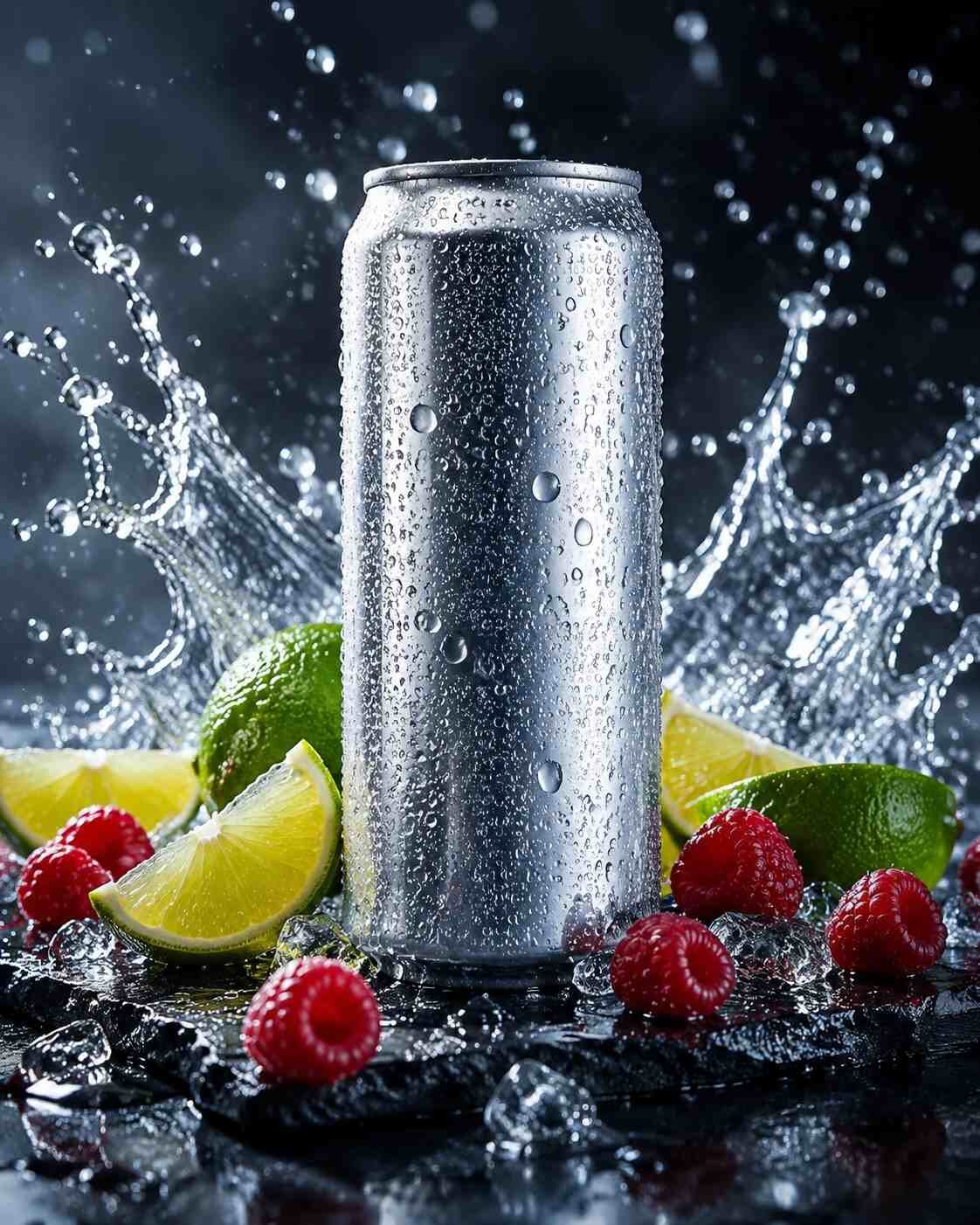
高端硬苏打水产品展示
10. 结语:携手共创战略性饮料创新新篇章
Formulating a successful high-ABV hard seltzer is far more complex than simply scaling up the flavor dosage of a 4% recipe. It is an intricate physico-chemical puzzle that requires a deep understanding of thermodynamics, polymer interactions, and advanced chemical engineering. As consumer palettes become more sophisticated and the market grows increasingly saturated, the margin for error diminishes. A product that suffers from rapid flavor fading will not survive in today's competitive landscape.在我们先进的风味制造中心,我们不仅提供原料,更提供高度工程化、经过科学验证的解决方案。从采用抗酯交换的天然相似基础分子,到部署突破性微乳技术以抵抗风味吸附,我们的研发团队具备应对饮料行业最艰巨技术难题的实力。诚邀饮料开发商、品牌所有者及生产工程师共同合作,借助我们的专业,共同打造经得起时间考验的坚韧、生动、引领市场的风味轮廓。