Автор: Команда научных исследований и разработок, CUIGUAI FlavoringОпубликовано: Guangdong Unique Flavor Co., Ltd.Последнее обновление: Jun 21, 2026WhatsApp и Telegram: +86 189 2926 7983
Визуализация лаборатории исследований напитков
1. Введение: Эволюция жестких газированных напитков и вызов высокого содержания алкоголя
Рынок готовых к употреблению алкогольных напитков претерпел за последнее десятилетие кардинальные изменения. Изначально доминировали солодовые напитки и сладкие охлаждающие коктейли, но индустрию революционизировал появление жесткого сэлцера. Обладая свежим, чистым профилем, низкой калорийностью и освежающей газировкой, эти напитки быстро стали популярными среди потребителей, заботящихся о здоровье, ищущих легкую альтернативу пиву или классическим коктейлям. В начальные периоды этого бума стандартный объем алкоголя (ABV) составлял около скромных 4-5%. Такой низкий уровень алкоголя позволял относительно просто формировать аромат. Стандартные водорастворимые ароматы, в основном фруктовые эфиры и простые ботанические экстракты, хорошо проявляли себя в этом разбавленном этаноловом окружении. Физико-химические свойства раствора с 4% ABV очень близки к воде, что обеспечивает стабильность коэффициентов распределения ароматов и высокую точность воспроизведения сенсорных профилей, соответствующих первоначальным лабораторным образцам.However, as the market has matured, consumer preferences have rapidly evolved. Driven by a desire for more robust drinking experiences and a higher 'value-to-alcohol' ratio, the market is currently witnessing a massive pivot toward 'imperial' or high-ABV hard seltzers. Today, it is increasingly common to see formulations pushing 8%, 10%, or even 12% ABV. While this meets consumer demand, it introduces a labyrinth of profound technical challenges for beverage formulators and flavor chemists. The most notorious of these challenges is 'Flavor Fading'—a phenomenon where a beverage tastes spectacular immediately after production but loses its aromatic intensity, structural complexity, and overall sensory impact within a matter of weeks on the shelf. This fading is not merely a perceptual illusion; it is the result of rigorous, uncompromising physical and chemical dynamics acting upon the delicate organic molecules that constitute a flavor profile.Исчезновение аромата в высокоалкогольных основах представляет собой критический экономический и репутационный риск для производителей. Продукт, поступающий на рынок с приглушенным, искажённым или полностью разрушенным ароматическим профилем, неизбежно столкнется с низким повторным спросом и размыванием бренда. Преодоление этой трудности требует выхода за рамки простых методов формирования рецептур. Необходим строгий, системный подход, основанный на передовых знаниях физической химии, полимерной науки и современных систем доставки. Этот всесторонний технический гид, подготовленный нашей командой экспертов по ароматической инженерии, раскроет термодинамические механизмы исчезновения аромата в матрицах с высоким содержанием этанола, исследует пути химического разрушения и предложит практические, научно обоснованные стратегии создания устойчивых, стабильных на полке ароматов для следующего поколения крепких сэлцеров с высоким содержанием алкоголя.
2. Физико-химические свойства матрицы напитка: взаимодействие этанола и воды
To truly understand why flavor fading occurs with such aggressive rapidity in high-ABV systems, one must first deconstruct the physical chemistry of the solvent matrix itself. A hard seltzer is primarily a binary solvent system composed of water and ethanol, infused with carbon dioxide, organic acids, and trace flavor molecules. Water is a highly polar solvent, forming a tight, structured network of hydrogen bonds. Ethanol, on the other hand, is an amphiphilic molecule; it possesses a polar hydroxyl group (-OH) capable of hydrogen bonding, and a non-polar ethyl group (-CH2CH3) that interacts favorably with hydrophobic compounds. In low-ABV seltzers (4-5%), the solvent matrix is overwhelmingly aqueous. Hydrophobic flavor molecules—such as the terpenes found in citrus oils—are inherently unstable in this aqueous environment. Because they are energetically 'uncomfortable' in water, these volatile organic compounds (VOCs) are readily expelled from the liquid phase into the gaseous headspace of the beverage can. This high air-water partition coefficient (Kaw) is precisely what gives low-ABV seltzers their explosive, aromatic 'pop' when the can is cracked open.As the ABV increases to 8% or 12%, the thermodynamic landscape of the beverage fundamentally transforms. The introduction of higher concentrations of ethanol significantly lowers the overall dielectric constant and polarity of the solvent matrix. Ethanol acts as a powerful co-solvent, disrupting the structured hydrogen-bonding network of water and creating hydrophobic 'pockets' within the liquid. For lipophilic (fat-loving) flavor molecules, this new environment is highly favorable. Instead of being violently expelled into the headspace, these molecules become comfortably solvated within the ethanol-rich matrix. Consequently, the partition coefficient shifts from an air-water dynamic to an air-ethanol dynamic (Kae). The vapor pressure of the flavor molecules drops precipitously. This thermodynamic suppression is a primary driver of perceptual flavor fading. The flavor hasn't necessarily disappeared; rather, it is trapped in the liquid phase, unable to aerosolize and reach the consumer's olfactory receptors. The beverage tastes 'flat' or 'muted' because the aromatic release has been chemically throttled by the increased ethanol concentration.Более того, высокие концентрации этанола изменяют реологические свойства и поверхностное натяжение напитка. Это влияет на образование пузырьков и динамику высвобождения углекислого газа. Когда CO2 пузырьки поднимаются к поверхности газированного напитка, они выступают в роли физических носителей, удаляя летучие ароматические соединения из жидкости и выбрасывая их в пространство над жидкостью. Изменения поверхностного натяжения под воздействием высокого уровня этанола могут менять размер и частоту этих пузырьков, что, в свою очередь, влияет на скорость переноса ароматических молекул. Понимание этих сложных термодинамических взаимодействий — ключевой этап в разработке ароматов, способных противостоять подавляющему действию высоко-ABV матрицы.
Молекулярная структура капли эмульсии
3. Основные механизмы химического разложения в напитках с высоким содержанием алкоголя
Помимо физического подавления летучести, матрицы с высоким содержанием алкоголя активно разрушают ароматические молекулы через агрессивные химические пути разложения. Обычно жесткие газированные напитки формулируются с низким pH (обычно между 3,0 и 3,5) с помощью органических кислот, таких как лимонная или яблочная. Эта кислота необходима для обеспечения микробиологической стабильности и освежающей кислинки. Однако сочетание высокого содержания этанола и высокой концентрации протонов (H+) создает очень реактивную химическую среду. Основные механизмы разложения включают кислотно-катализированный гидролиз, окисление и трансэтерификацию.
А. Кислотно-катализированный гидролиз и трансэтерификация
Esters are a fundamental class of flavor compounds, responsible for the vast majority of fruity, sweet, and floral notes in beverages. For example, isoamyl acetate provides a characteristic banana/pear note, while ethyl butyrate imparts a juicy pineapple aroma. In an acidic aqueous environment, esters undergo acid-catalyzed hydrolysis, breaking down into their constituent alcohols and carboxylic acids. This reaction is entirely reversible and reaches an equilibrium state. However, in a high-ABV seltzer, the massive abundance of ethanol completely alters the equilibrium dynamics. Through a process known as transesterification, the ethanol molecules actively substitute the original alcohol group of the ester. This leads to the formation of entirely new ethyl esters, completely mutating the intended flavor profile. Over a period of 4 to 8 weeks, a crisp, specific berry flavor might degrade into a generic, muddy, 'candied' profile as the original complex esters are systematically replaced by simple ethyl esters. Research published in the Journal of Agricultural and Food Chemistry highlights that the rate of ester hydrolysis and transesterification increases logarithmically as the ABV rises past the 6% threshold, making high-ABV formulations exceptionally vulnerable.
B. Окислительное разложение терпенов
Citrus flavors (lemon, lime, grapefruit, orange) are arguably the most popular profiles in the hard seltzer category. The backbone of these flavors relies on terpenes, specifically d-limonene, pinene, and gamma-terpinene. Terpenes are highly unsaturated hydrocarbons, meaning they contain multiple double bonds. These double bonds are electronically dense and highly susceptible to oxidative attack. Even trace amounts of dissolved oxygen in the beverage, combined with the catalytic effects of light or trace transition metals (like copper or iron from the water supply), can initiate a radical chain reaction. In a high-ethanol environment, the solubility of oxygen is slightly altered, and the matrix can sometimes stabilize the oxidative intermediates, leading to rapid degradation. Limonene, for instance, oxidizes into alpha-terpineol, carvone, and carveol. Sensory-wise, this transformation is disastrous. The bright, zesty, freshly peeled citrus note degrades into a heavy, stale, 'piney', or even solvent-like off-note. Controlling oxidation in high-ABV matrices requires stringent dissolved oxygen management during production and the use of specialized, oxidatively stable flavor extracts.
C. Образование ацеталов
Альдегиды, отвечающие за важные верхние ноты (например, зеленое яблоко у гексаналя или вишневый оттенок у бензальдегида), очень реактивны в присутствии спиртов. В высоко-ABV селе альдегиды взаимодействуют с этанолом, образуя гемиацетали и затем стабильные ацеталы. Эта реакция лишает ароматический профиль ярких, острых верхних нот, делая напиток плоским и лишенным начальной яркости. Химическая утечка альдегидов — скрытый механизм потери аромата, часто остающийся незамеченным до поздних стадий тестирования срока годности.
4. Утечка аромата: тихий вор в индустрии упаковки
Even if a formulator successfully designs a flavor system that is chemically and thermodynamically stable within the liquid matrix, the flavor can still be lost to the packaging itself—a phenomenon known as 'flavor scalping'. Hard seltzers are overwhelmingly packaged in aluminum cans. Bare aluminum is highly reactive with acidic beverages, so the interior of the can must be coated with a protective polymeric liner. Historically, these liners were made of epoxy resins containing Bisphenol A (BPA). Due to health concerns, the industry has shifted to BPANI (BPA Non-Intent) liners, primarily utilizing acrylic or modified polyester polymers. While these modern liners are safer, they are highly oleophilic (oil-loving).Flavor scalping occurs when hydrophobic flavor molecules migrate out of the liquid beverage and absorb into the polymeric matrix of the can liner. According to findings published by the American Chemical Society (ACS), the rate and extent of flavor scalping are governed by the partition coefficient between the beverage and the polymer, as well as the diffusion coefficient of the flavor molecules within the polymer. High-ABV seltzers exacerbate this problem drastically. Ethanol acts as a plasticizer for the polymeric liner. It penetrates the polymer matrix, increasing the 'free volume' between the polymer chains. This swelling of the liner effectively opens the floodgates, allowing larger, more complex hydrophobic flavor molecules to easily diffuse into and become trapped within the plastic lining. Citrus terpenes, due to their highly non-polar nature, are the most frequent victims of scalping. In an 8% ABV seltzer packaged in a standard BPANI lined can, up to 60% of the limonene content can be scalped within the first 30 days of storage. The result is a total collapse of the flavor profile. Combating flavor scalping requires a multi-pronged approach: selecting liner materials with lower sorption capacities, optimizing the ABV-to-liner interaction, and utilizing advanced flavor encapsulation technologies.
Диаграмма процесса скальпинга ароматов
5. Создание устойчивых систем: стратегическая разработка и подбор молекул
Addressing the multifaceted challenges of flavor fading requires formulators to abandon 'off-the-shelf' solutions and engage in rigorous, customized molecular engineering. The first strategic pillar is intelligent molecule selection. A flavor profile is composed of top notes (highly volatile, immediate impact), middle notes (the core character), and base notes (heavy, lingering molecules). In a high-ABV matrix, top notes are thermodynamically suppressed by ethanol and chemically vulnerable to acetal formation or transesterification.To build a resilient profile, flavor chemists must selectively substitute vulnerable molecules with highly stable analogs. For example, instead of relying heavily on unstable acetates (like isoamyl acetate) for a tropical profile, chemists will utilize heavier, more complex lactones and stable aldehydes that resist acid-catalyzed hydrolysis. By carefully curating the molecular building blocks, the structural integrity of the flavor can be maintained even under extreme chemical stress. Furthermore, because ethanol suppresses volatility, the overall dosage and concentration of base notes must be significantly fortified to punch through the heavy solvent matrix. This 'bottom-heavy' formulation approach ensures that even if some top notes are lost to degradation or scalping, a robust, identifiable flavor core remains intact throughout the shelf life.Для производителей, стремящихся к максимальной устойчивости, использование специализированных, заранее разработанных ингредиентов является краеугольным камнем. For instance, utilizing high-quality Natural Citrus Flavor ExtractsОтобранные и фракционированные таким образом, чтобы удалить нестабильные терпеновые соединения и сосредоточить стабильные кислородсодержащие соединения, могут значительно снизить скорость окислительного разложения. Удаляя слабые звенья в химической цепи, вся система аромата становится в разы более стабильной.
6. Передовые системы доставки: эмульсии и микрокапсулирование
Хотя замещение молекул является весьма эффективным, оно не может полностью решить физические проблемы подавления летучести и скальпинга ароматов. Для физической защиты деликатных ароматических масел от агрессивной этаноловой матрицы и олеофильной внутренней облицовки банки необходимо применять передовые системы доставки. Вершиной этой технологии в секторе напитков являются специализированные нанэмульсии и методы микрокапсулирования.В традиционном жидком экстракте ароматизаторы просто растворяются в носителе (например, пропиленгликоле или этаноле) и добавляются в напиток. В системе эмульсий гидрофобные ароматические масла механически измельчаются до микроскопических капель (часто субмикронных размеров) и покрываются защитным слоем эмульгаторов или поверхностно-активных веществ. Эта физическая преграда изолирует ароматические соединения от агрессивной, кислой среды с высоким содержанием этанола. Она защищает эфиры от гидролиза, предохраняет терпены от окисления и, что особенно важно, предотвращает взаимодействие и поглощение ароматических молекул в внутреннюю поверхность банки, останавливая скальпинг аромата на месте.Creating stable emulsions for high-ABV seltzers is incredibly complex. Standard emulsifiers often fail in the presence of high ethanol, leading to 'ringing' (oil separating and floating to the neck of the bottle) or flocculation (droplets clumping together). To overcome this, formulators utilize advanced weighting agents (like Sucrose Acetate Isobutyrate - SAIB, or ester gum) to balance the specific gravity of the oil phase with the aqueous phase, preventing separation governed by Stokes' Law. Furthermore, highly robust, sterically stabilizing surfactants, such as modified food starches (OSA starch) or specialized quillaja saponins, are employed to maintain droplet integrity even at 10% or 12% ABV. Our comprehensive technical exploration on Microencapsulation in Food Science Обеспечивает глубокое погружение в динамику жидкости и кинетику этих систем.By integrating our Advanced Beverage Emulsions,Производители могут добиться беспрецедентной стабильности на полке. Эти эмульсии созданы с высокой точностью, чтобы выдерживать термодинамические шоки в условиях высокого содержания этанола, обеспечивая сохранение яркого, насыщенного и аутентичного вкусового профиля от дня розлива до самого конца предполагаемого срока хранения.
7. Модуляция матрицы: взаимодействие кислот, подсластителей и газирования
Flavor is not experienced in a vacuum; it is perceived in concert with taste (sweet, sour, salty, bitter) and mouthfeel (astringency, carbonation bite, ethanol burn). In a high-ABV seltzer, modulating the overall beverage matrix is just as critical as protecting the flavor molecules themselves. The intense 'burn' or harshness of high ethanol concentrations can easily overwhelm delicate fruit or botanical notes, exacerbating the perception of flavor fading. Effective matrix modulation involves the strategic use of organic acids, specialized sweeteners, and precise carbonation controls.Organic acids do more than just lower pH; they fundamentally alter how flavors are perceived on the palate. Guidelines established by the Flavor and Extract Manufacturers Association (FEMA) emphasize the synergistic relationship between specific acids and specific flavor profiles. Citric acid, with its sharp, immediate 'bite', is ideal for lifting and enhancing citrus profiles like lemon and lime. Malic acid, which offers a smoother, more lingering tartness, pairs exceptionally well with berry, apple, and stone fruit profiles. Tartaric acid, inherently astringent, is often utilized in grape or wine-inspired seltzers. By matching the acid profile to the flavor system, formulators can enhance the perceived intensity of the flavor, masking the suppressive effects of the ethanol.To combat ethanol burn, formulators increasingly utilize advanced masking agents and high-intensity sweeteners, even in 'zero sugar' products. Minute, sub-threshold dosages of glycosylated steviol glycosides or specialized botanical modulators can bind to bitter receptors on the tongue, smoothing out the harsh alcoholic finish without adding perceived sweetness. This allows the core flavor profile to shine through unimpeded.В конечном итоге, уровень газирования играет важнейшую физическую роль в передаче вкуса. Объем углекислого газа (обычно колеблется от 2,5 до 3,0 объемов в твердом сэлцере) определяет скорость удаления летучих соединений из жидкости и их доставки в обонятельную систему. В сэлцере с высоким содержанием алкоголя, где летучесть по природе своей подавлена, оптимизация размера пузырьков CO₂ и скорости нуклеации может искусственно вытеснять ароматические компоненты из раствора, создавая более яркое первоначальное ароматическое восприятие. Для всестороннего анализа этих взаимодействий, refer to our detailed publication on Beverage Flavor Stability Mechanisms .
8. Аналитические методы для отслеживания и проверки стабильности
Субъективное дегустационное восприятие недостаточно для гарантии срока хранения высокоалкогольного сэлцера. Профессиональное производство ароматов требует строгих, объективных аналитических методов для количественной оценки исчезновения аромата, выявления путей его разрушения и подтверждения эффективности защитных систем доставки. Золотым стандартом в анализе ароматов является газовая хроматография с масс-спектрометрией (ГХ-МС). В сочетании с твердотельной микроконтекстуризацией (SPME) аналитики могут точно забирать ароматический профиль, присутствующий в воздушной пробе внутри герметичной банки, без изменения жидкой матрицы.Надежный протокол тестирования стабильности включает розлив прототипа напитка и его экспрессное старение при повышенных температурах (например, 35°C–40°C), моделирующих месяцы хранения за несколько недель. Использование SPME-GC-MS позволяет точно отслеживать концентрацию ключевых маркерных молекул (например, лимонена для цитрусовых или этилбутирата для ананаса) со временем. Значительное снижение лимонена при одновременном росте карвонена свидетельствует о происходящем окислительном разложении. Исчезновение отдельных эфиров без появления окислительных продуктов говорит о гидролизе или утечке аромата. Эти объективные молекулярные данные позволяют разработчикам систем вносить точечные корректировки с хирургической точностью.Furthermore, instrumental analysis must be paired with rigorous descriptive sensory analysis. Highly trained sensory panels utilize methodologies like Quantitative Descriptive Analysis (QDA) to map the organoleptic profile of the beverage on a multidimensional spider web graph. They evaluate parameters such as 'initial impact', 'fruit fidelity', 'ethanol burn', and 'off-note development'. By correlating the objective GC-MS data with the subjective human perception data from the sensory panel, manufacturers can confidently guarantee a product that not only survives the chemistry of the can but also delights the consumer upon consumption. As mandated by internal quality controls and referencing regulations from bodies like the Alcohol and Tobacco Tax and Trade Bureau (TTB), maintaining this dual-pronged analytical approach ensures total compliance, safety, and superior market performance.
9. Часто задаваемые вопросы о формулировках ароматов с высоким содержанием алкоголя
Чтобы дополнительно помочь разработчикам напитков ориентироваться в этом сложном ландшафте, мы подготовили технический раздел с часто задаваемыми вопросами, освещающими наиболее актуальные проблемы при формулировании напитков с высоким содержанием алкоголя:Q1:Какой оптимальный диапазон pH для максимизации стабильности аромата в твердом содовом напитке с содержанием алкоголя 8%?A: The optimal pH is a delicate balancing act between microbial safety, sensory crispness, and chemical stability. Generally, a pH of 3.2 to 3.4 is targeted. Dropping the pH below 3.0 drastically accelerates acid-catalyzed hydrolysis of esters and can increase the astringency of the ethanol bite. Conversely, allowing the pH to rise above 3.6 can compromise microbial stability and result in a 'flabby' or flat sensory profile. Utilizing buffer systems, such as a combination of citric acid and sodium citrate, can help lock the pH at the optimal target, reducing fluctuations during shelf life.Q2: Может ли регулировка газирования полностью компенсировать подавление летучести аромата, вызванное высоким содержанием этанола?A: While increasing carbonation (e.g., pushing from 2.6 to 3.0 volumes of CO2) increases the kinetic stripping of volatiles into the headspace—thereby improving the initial aromatic burst—it is not a total cure. Excessive carbonation increases the 'carbonic bite' (the pain receptors triggered by carbonic acid on the tongue), which can overwhelm delicate flavors and exacerbate the harshness of the alcohol. Carbonation should be viewed as a delivery mechanism, not a replacement for chemically stable flavor formulation.Q3:Все внутренние покрытия банок одинаково подвержены утрате ароматов?A: Нет. Физические свойства полимерной внутренней поверхности определяют ее склонность к утечке аромата. Традиционные эпоксидные покрытия, отлично защищающие от коррозии, очень подвержены утечке гидрофобных терпенов. Современные акриловые BPANI-слои обладают более плотной кросс-связанной структурой, что немного снижает диффузию крупных молекул ароматов. Однако при наличии сильного пластификатора, например, 10% этанола, практически все стандартные покрытия демонстрируют некоторую степень утечки. Поэтому наиболее надежной защитой являются инкапсулированные эмульсии.Q4: Почему цитрусовые вкусы кажутся исчезающими значительно быстрее, чем ванильные или пряные ноты в твердых содовых напитках?A: Всё зависит от химической структуры основных молекул ароматов. Цитрусовые ароматы в значительной мере основаны на терпенах (лимонен, пинен) и чувствительных альдегидах (цитраль). Терпены очень гидрофобны (что ускоряет их утечку) и содержат множественные двойные связи (что способствует быстрому окислению). Ванильные и пряные ноты, напротив, основаны на тяжелых, стабильных фенольных соединениях (например, ванилин или эвгенол). Эти тяжелые молекулы менее летучие, менее гидрофобные и химически стойкие, что позволяет им легко сохраняться в сложной высоко-ABV матрице без деградации или поглощения в liner.
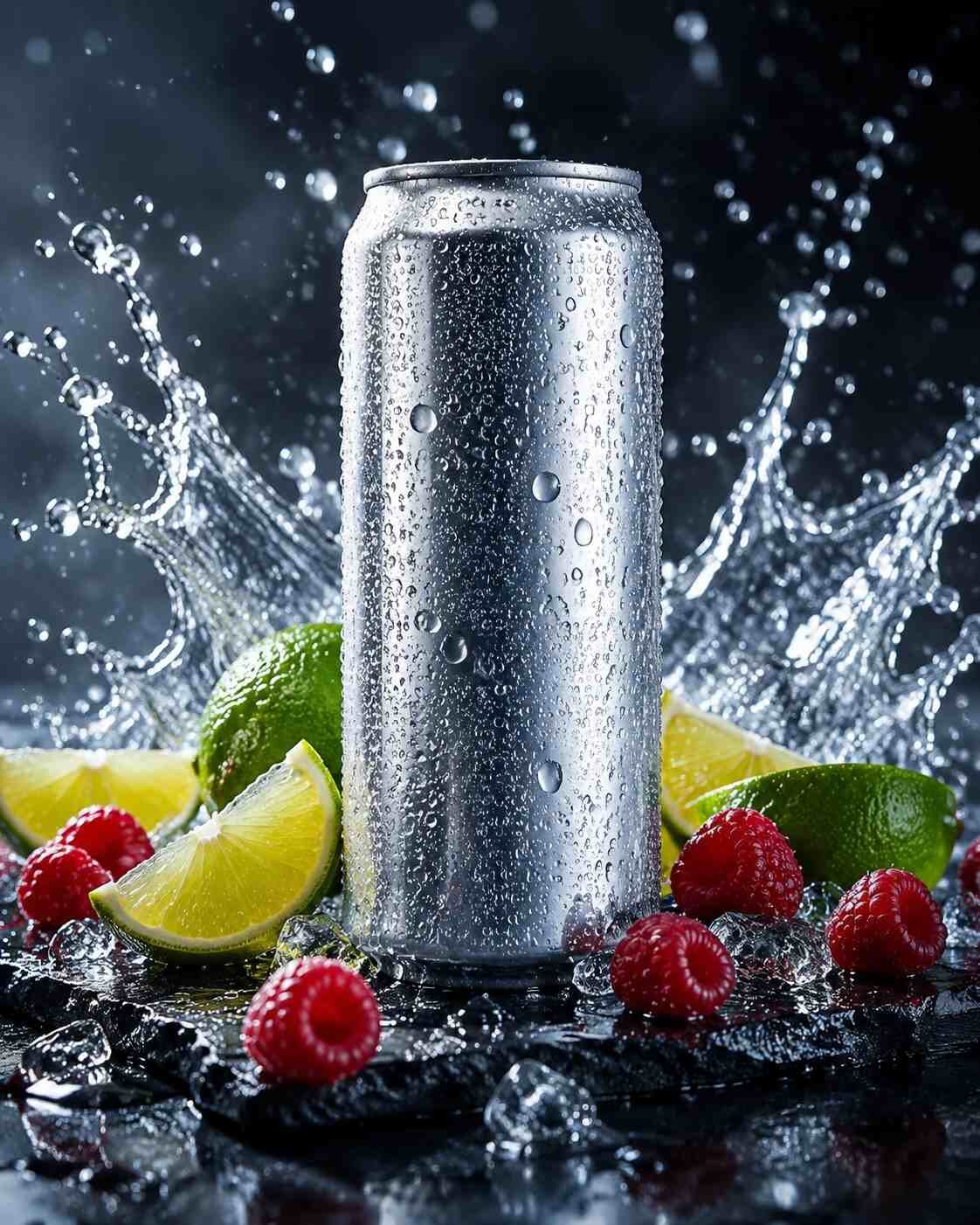
Премиальный снимок продукта жесткого сэлцера
10. Заключение: Сотрудничество для стратегического инновационного развития напитков
Formulating a successful high-ABV hard seltzer is far more complex than simply scaling up the flavor dosage of a 4% recipe. It is an intricate physico-chemical puzzle that requires a deep understanding of thermodynamics, polymer interactions, and advanced chemical engineering. As consumer palettes become more sophisticated and the market grows increasingly saturated, the margin for error diminishes. A product that suffers from rapid flavor fading will not survive in today's competitive landscape.На нашей передовой фабрике по производству ароматизаторов мы предлагаем не просто ингредиенты, а высокотехнологичные, научно обоснованные решения. Используя природные аналоги, устойчивые к трансэтерификации, и внедряя передовые микроэмульсии, побеждающие утечку аромата, наша команда НИОКР способна решать самые сложные технические задачи индустрии напитков. Мы приглашаем разработчиков напитков, владельцев брендов и технологов к сотрудничеству. Вместе мы создадим стойкие, яркие и лидирующие на рынке ароматические профили, проверенные временем.
Технический обмен и запрос на бесплатный образец
Готовы преодолеть исчезновение аромата в ваших продуктах с высоким содержанием алкоголя? Свяжитесь с нашей командой технических инженеров сегодня, чтобы обсудить ваши конкретные задачи по формулировке, заказать индивидуальные прототипы ароматов и получить бесплатные технические образцы наших передовых эмульсий и стабильных экстрактов напитков.